Our May 2023 calendar entry has been uploaded to the website. Lots of new species recorded and as stated in our previous post we reached the 550 species mark!
DC: 02/06/2023
Our May 2023 calendar entry has been uploaded to the website. Lots of new species recorded and as stated in our previous post we reached the 550 species mark!
DC: 02/06/2023
Yesterday was rather exciting as lazy bank holiday Mondays go in the Garden. For us it was the day the rare spider called Cryptachaea blattea came to visit. Well, probably! We did attempt to get consensus from a Spider ID group but there is a chance this could be a different species called Parasteatoda tepidariorum, which isn’t especially common either. However we believe it was the former which is a species introduced from Africa to Europe, as well as other parts of the world.
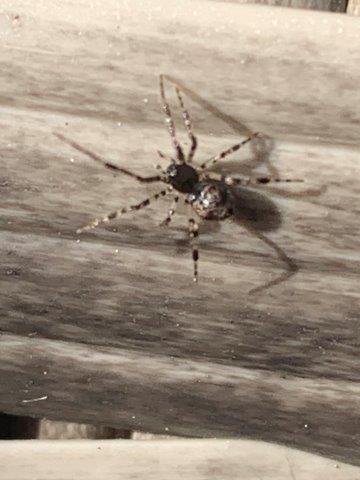
See our species account HERE. These guys are tiny, think money spider and your in the right ball park. The field guide Britain’s Spiders *1 marks this species as extremely rare but it’s not long been on these shores as the link above explains, and is likely still spreading.
It just goes to show. Keep looking for long enough and even rare species will pop up in the most unlikely places, including our towns and cities and if you’re lucky your own back yard.
DC: 30/05/2023
Finally! We recorded our first millipede in the Garden today. We had to dust off the stereo microscope to search amongst the detritus under the hazel tree, but so glad we did. This new species also represents a new class of arthropod for the Garden, The Diplopoda.
Not 100% sure on the species though. We think, having trawled some trusted sources online, that it is likely to be Ophiodesmus albonanus, but there is another similar species called Macrosternodesmus palicola. The two species are often found together so we will head out and try and find the other one, which apparently has a much rougher appearance.
Anyway, as a Garden first for the Diplopoda we thought we’d give this guy a special mention.
DC: 27/05/2023
Thought we’d share the following. The meadow area (we used to call it the lawn) just about ready to bloom.
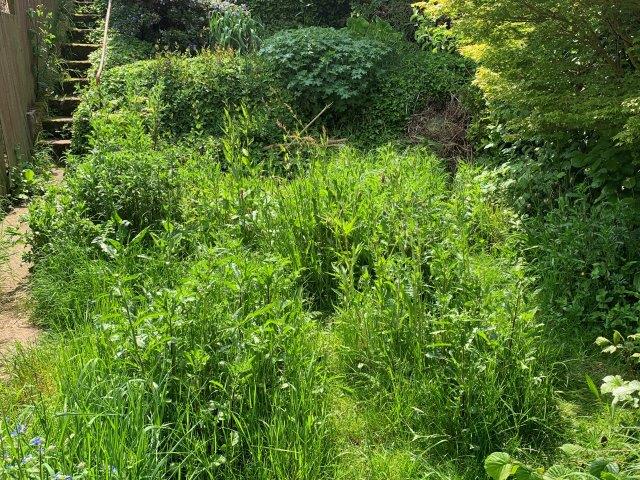
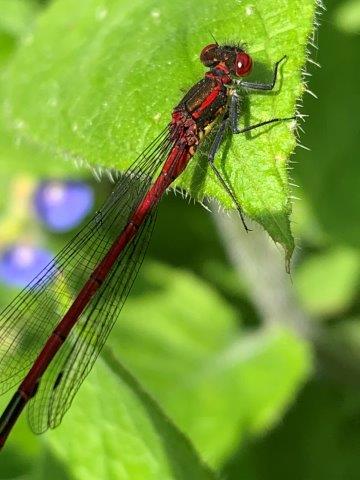
Amazing warm sunshine today, with lots buzzing about. Our first recorded Odonata of the year visited in the form of the Azure Blue and the Large Red Damselfly, neither new to the garden but always nice to see them appear during the spring.
Two new species of spider and a new true bug were recorded today as well. We will put an update in the May calendar entry in a couple of weeks. But we will finish on an old friend, the Rose Chafer, shown here today munching on it’s beloved California Lilac.
DC: 18/05/2023
We’ve had a number of new species recorded in the garden so far this year. We ended 2023 with 524 species recorded in the Garden, by the end of April this tally had increased to 536 and seeing as we haven’t posted in a while we thought we’d share what’s new in the Garden.
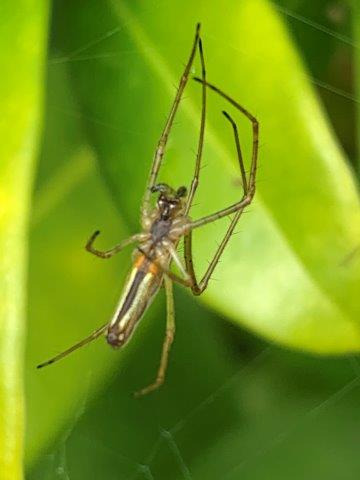
Tetragnatha montana. This one has been marked as a most likely species, as there are several others that look similar. However we are reasonably confident with it’s identification. Click here.
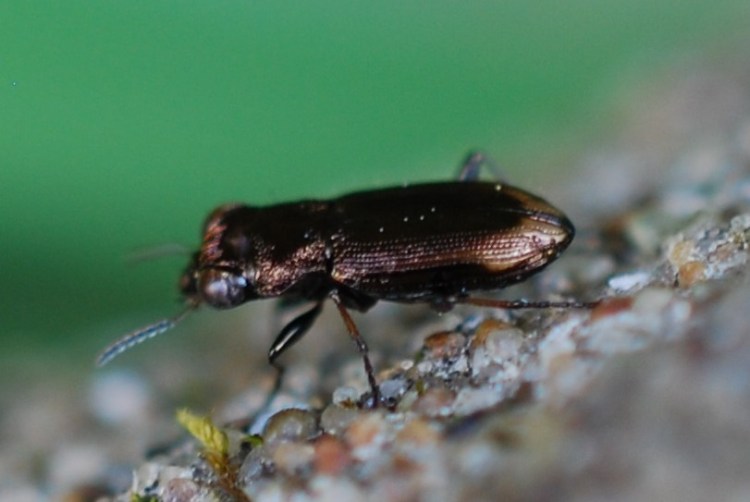
Common Springtail-stalker – Notiophilus biguttatus. Click here for more information
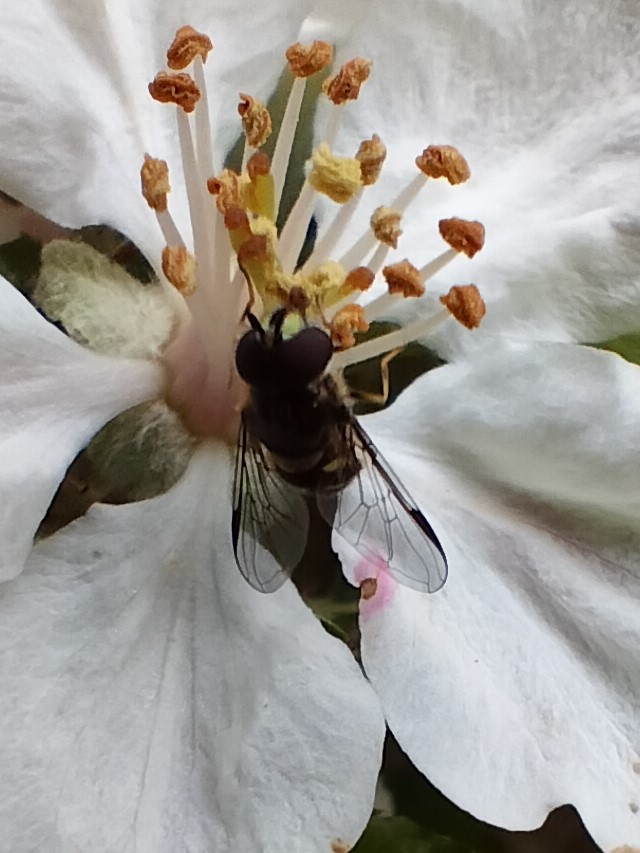
Dasysyrphus albostriatus. Yet another hoverfly added to our list, click here for more details.
Fabricius Nomad Bee – Nomada fabriciana. Click here for more info

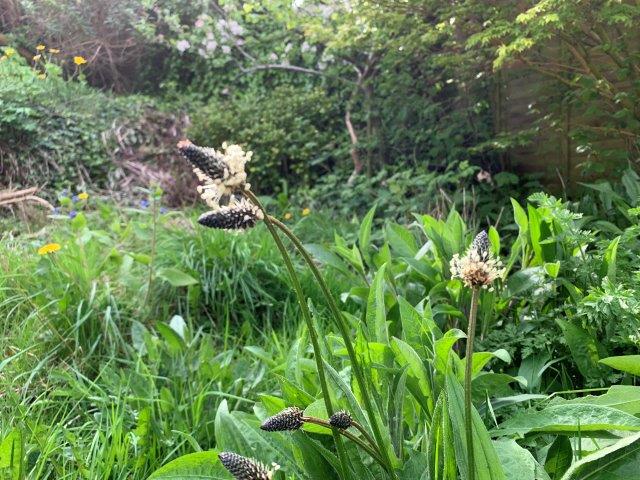
Ribwort Plantain – Plantago lanceolata. Click here for more info.
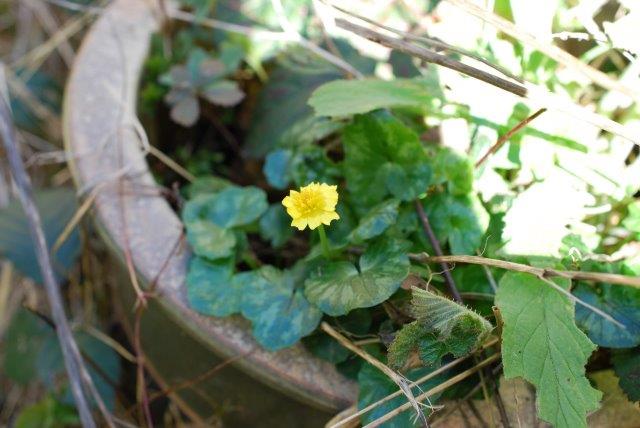
Lesser Celandine – Ficaria verna
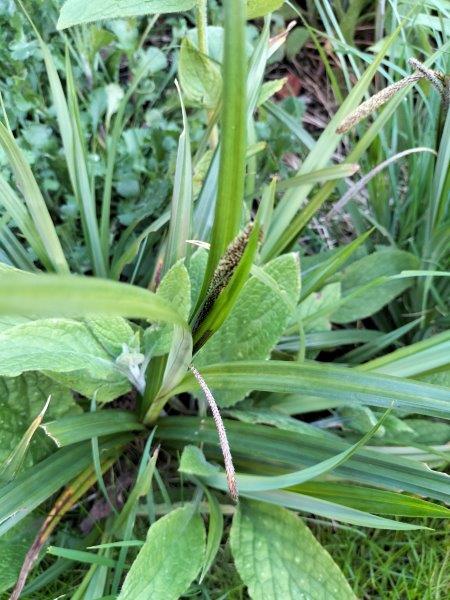
Pendulous sedge – Carex pendula
Unfortunately some species just don’t hang about to pose for photos, such as the Long-tailed Tit – Aegithalos caudatus, Pied Wagtail – Motacilla alba and House Mouse – Mus musculus, all of which were added to the species list during April. However the House Mouse, as shown in our April Calendar update was kind enough to allow itself to be film, see April – And it rained some more…
DC: 15/05/2023
What we enjoy about wildlife gardening is that even in a small area, there is an incredible amount to observe. You really don’t need to drive to the countryside to get your wildlife fix, although its not a bad idea to get out and about.
For example in just 18 months we have uploaded over 100 video shorts and clips to our YouTube channel for the sole purposes of sharing on this site. We could probably double this number with the ones we haven’t had time to work on. Likewise photographs of unusual behaviour and interesting species fill up a hard drive we own.
Below are some more of the things we had yet to organise and upload to Wildlifegarden.org during 2022.

Female Spotted Wolf Spiders don’t just lug their egg sack around with them. Once hatched the diligent mother also carriers the newly born young around for a period of time for extra protection. A formidable form of protection against any arthropod after a small snack.
Viruses. With the advent of home Covid tests, we questioned whether we should, after having contracted the disease and coughed repeatedly in the garden, add Covid 19 to our species list (remembering the objective of this project is to list all species we find in one small garden). This opens up the debate on whether viruses can be considered life at all. For now we will steer clear of that minefield and leave viruses off the list. But clearly plants and animals suffer from a wide array of viruses, whether they are considered life or not, they do have an impact on wildlife that we probably don’t fully appreciate.

As most gardeners can attest, there are a few species of bird that, provided you spend enough time in the garden, do eventually become accustomed to having a human about and will forage and explore around you with little concern. Just don’t make any sudden movements or noise. Two such common species are the Robin and Blackbird, shown in the video below looking for a wriggly snack following a little bit of soil preparation we undertook.
Often you get to save an insect from a pond/bucket of water and for a short period, as it dries itself, you get the chance to take a close look at the little fella. In this case a honeybee found itself in a spot of bother and using an old branch we managed to get her safely to dry land but not before she gave her proboscis a good clean. We’d never appreciate what a substantial organ the proboscis was, and clearly it needs to be kept in good condition.
Obviously the more wildlife friendly you can make your garden the more there will be to see. So keep your gardens a little untidy, reduce disturbance whilst at the same time creating better and more diverse habitats and you will be amazed what turns up. Beats watching the TV any day.
If we have time we will continue to add more photos and videos from 2022 until spring comes along and it all starts again.
DC: 18/01/2023
Back in July this year we recorded the video below. It shows a Lasius niger worker ant using its considerable strength to move the dead body of a fellow ant. This is likely a behaviour known as ‘Necrophoresis’, where dead individuals are removed from the nest for sanitation reasons, a behaviour often seen in certain Hymenoptera (Wasps, Ants and Bees).
Like many we were aware that ants possess incredible strength and also vaguely aware that dead ants were often moved some distance from a nest to protect the colony from potential diseases. The term Necrophoresis was something we hadn’t come across before and it would be interesting to see it in other species.
However what we seem to be looking at above is the removal of a dead queen! As we touched upon in a previous post back on new years day, Lasius niger queens have an extraordinary longevity for a species this size, typically surviving for 15 years (records of up to 29 years have been made). As such we wondered if we had filmed something unusual and were perhaps witnessing the death of a colony. As once the queen has perished the colony has no means to replenish its numbers and gradually dies off. Although new evidence suggests some species can ‘promote’ certain worker ants (which are female) to queen status.
It turns out a more likely explanation for Lasius niger is that the worker ants resorted to ‘Regicide’ and killed the queen themselves. Apparently, this happens near the time of the formation of the colony. From time to time more than one queen will help Found the colony. After a short interval and once the first worker class has been produced, all but the most productive queen are killed by the workers. The short video below was taken the day after the one above, in roughly the same location and appears to show another worker ant disposing of the abdomen of a queen ant, we assume a different individual.
It seems royalty does not protect one from Necrophoresis in the world of Lasius niger and what we possibly witnessed above is an ant preforming ‘Undertaker’ duties and removing the unwanted queens corpse.
DC: 22/12/2022
We never really thought about a favourite garden species before! However, it’s December, and that means a Christmas Break and some time to tidy up/organise all the thousands of photographs and videos taken throughout 2022. It was whilst doing this we came across a little video which we had totally forgot about (link below), featuring perhaps our all-time favourite garden species the Zebra Spiders, or as we call them Nosey Ninja’s.
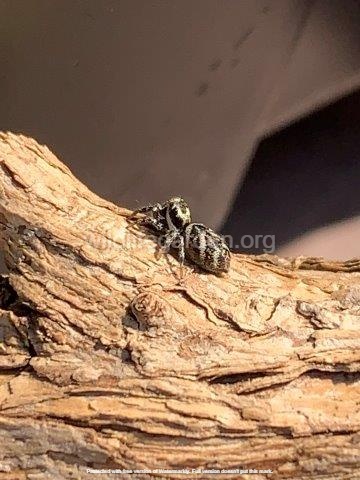
We have touched on Anthropomorphism before, the tendency to apply human traits or behaviours to specific animals. It is generally frowned upon, unless you’re a primatologist, in which case it seems to be the stuff of books.
But sometimes it’s hard not to see a slice of ourselves in the other inhabitants of the Garden. In this case it’s hard to ignore the fact that Zebra Spiders, or more accurately Salticus scenicus, are just darn right nosey, or at the very least super inquisitive.
They seem fearless of humans and stroll, run, jump or descend upon you for no other reason than to look you up and down. Reminding us that in the Garden you are not just always being watched, but also judged by these nosey critters.
In the video below, for a short while we follow one such Ninja as he (check out the big head…boys have big heads!) investigates our placing pots and seed trays on the roof of the wildlife hotel. As if to say ‘Yer fella! What’s this all about then?’
Biologically speaking these guys are not of course nosey, but simply looking for their next meal. They initially depend on eyesight alone. Then their speed allows for a fast approach, with that final jump allowing them to bring home the bacon.
A garden resident we hope will always be about to cheer us up!
DC: 16th December 2022
We’ve been a bit quiet of late on the old blog, mainly due to seemingly constant rain in Southwest England hampering our doing anything in the Garden. However we’ve not been idle and as our November calendar update shows, we’ve added 9 species to our Garden List and had a few other nice surprises along the way.
DC: 04/12/2022
The sad truth is fungi are under recorded in the garden, in no small part because of past gardening practices. The garden was dug over twice in ten years which isn’t great for fungi as it can destroy their hyphal networks.
Fungi can be difficult to identify further adding to a lack of confirmed species on the Garden species list. This we demonstrated recently when we tried to identify a rather drab brown mushroom found in the wetland area, click HERE to see how we got on. Thankfully we have over the last couple of years found a small handful of distinct species such as Jelly-ear, Turkey Tail and Green Elf Cap to at least make a start on a fungi list.
Today we recorded one of our favourite species, the Candle-snuff Fungus, so called because it looks reasonably like the smoke you get when extinguishing a candle (although our garden example isn’t the best).
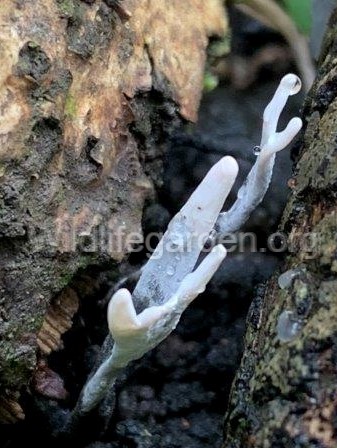
It is a widespread and common species, but like all the above mentioned species it is very much associated with rotting wood. We are still clearly lacking grassland fungi and this we know hasn’t always been the case.
The latest thinking suggests a lack of grassland fungi can be symptomatic of poor soil condition, not just through digging but also compaction and the impact both these can have on other species such as earth worms. In Amy Stewarts brilliant book, The Earth Moved (Ref 15: Click HERE), Stewart explains how earth worms and their slimy tunnels help fungi spread beneath the ground. Healthy soils mean more earth worms, which in turn means more fungi and bacteria breaking down vegetable matter and adding organic materials to the soil structure. This in turn helps air and water to penetrate the soils further improving the soils natural ability to recycle plant nutrients.
A priority for the Garden is to now prevent any future damage to the soil structure and allow it to fully recover, hopefully it is already well and we are just waiting for the fungi to catch up. This will mean not walking excessively on it when wet (we’ve always tried to avoid this), avoiding adding nutrients and pesticides and adopting a no-dig approach wherever possible.
DC: 29.10.2022
 Wildlife Garden