
The Springtails. Most people are probably oblivious to the existence of these tiny little animals. Yet the springtails are extremely numerous in the soils of most gardens and a fascinating group of animals to observe under magnification.
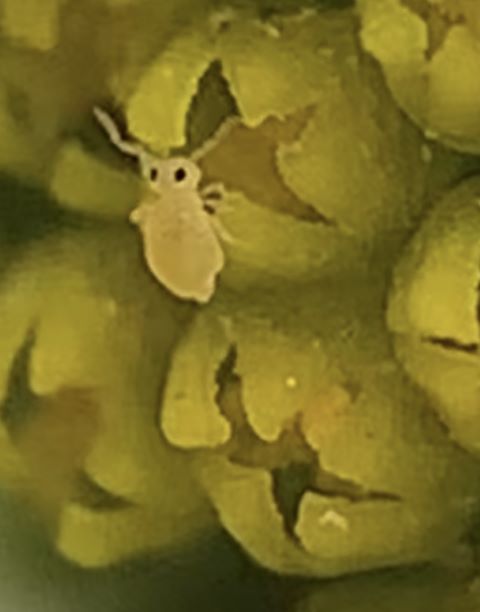

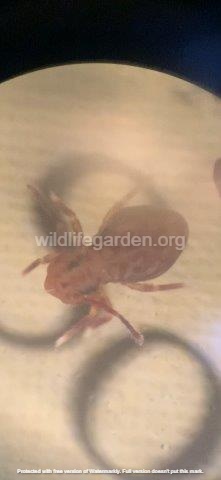
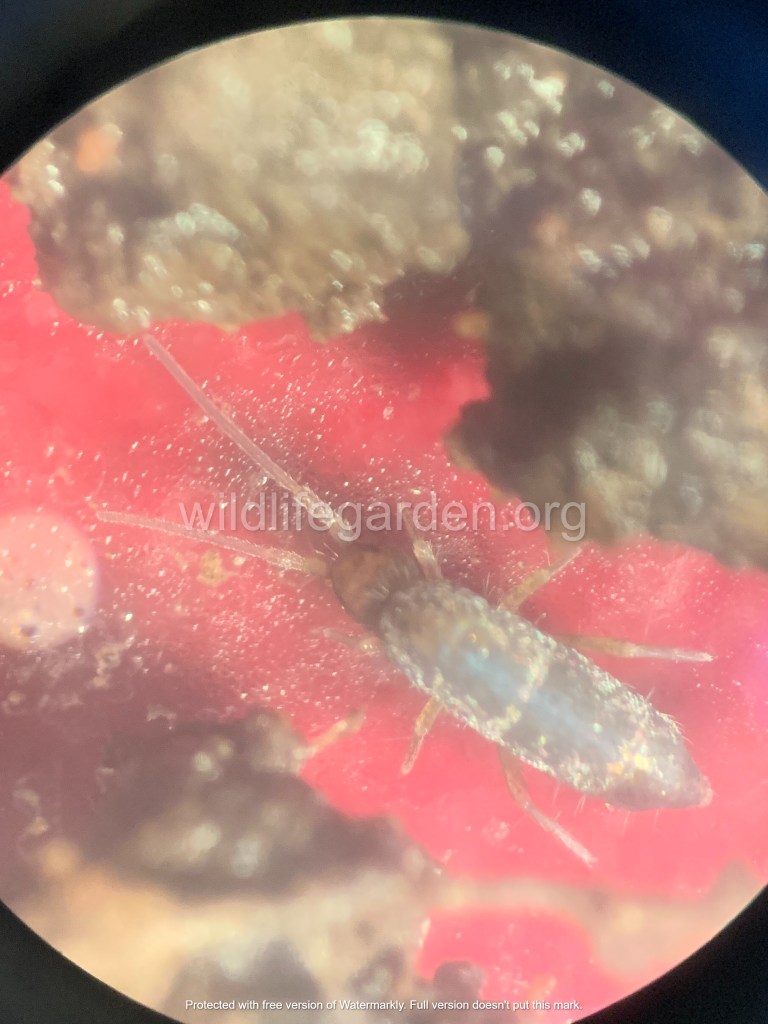
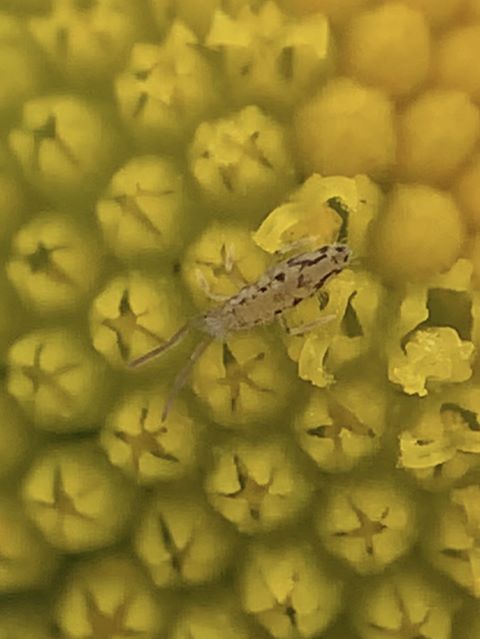
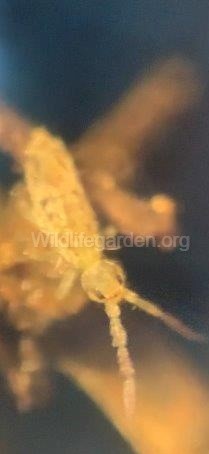
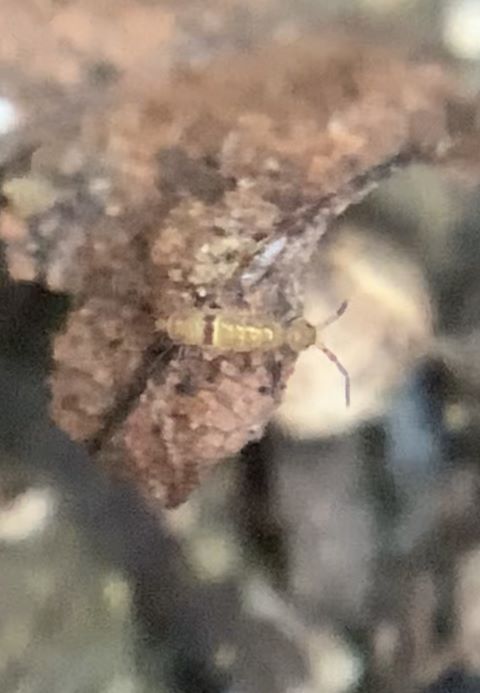
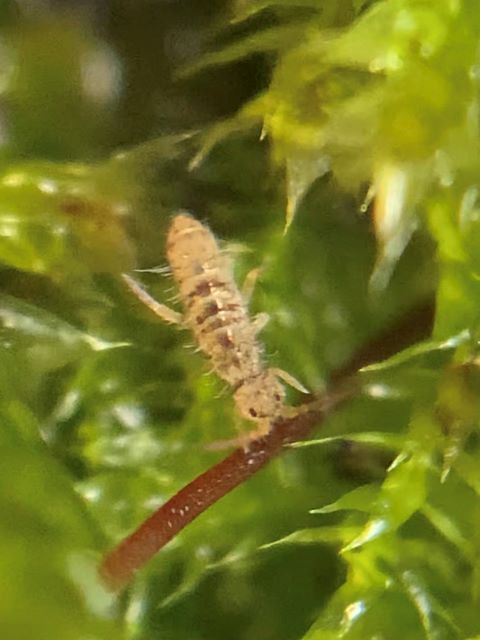
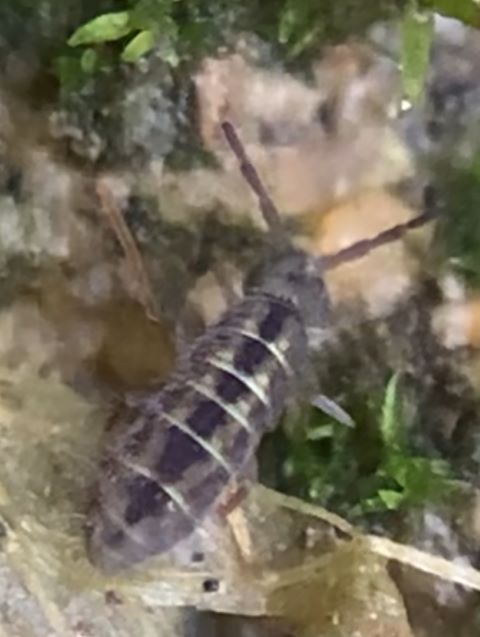
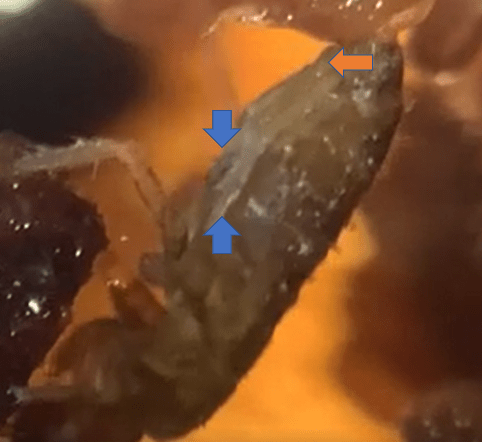
As you might expect, springtails get their name from their ability to escape predators by releasing a ‘spring’ underneath their bodies which flings them some considerable distance and hopefully out of harms way. The spring is not a spring in the usual sense of a coiled structure under tension. Instead it’s referred to as the ‘furca’ and is a fusion of two appendages underneath the insects body, highlighted below by the blue arrows. They are fused and hinged at the rear of the abdomen, as shown by the orange arrow. When the springtail needs to flee, the furca snaps away from the insects body via the hinge and off sails the insects away from danger.
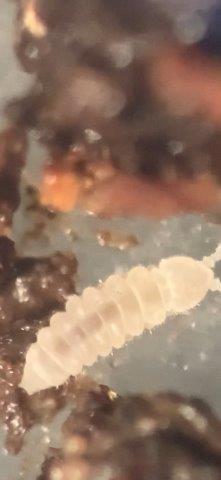
Interestingly springtails are now believed to be a very early branch of insect, perhaps from a time when crustaceans and insects had themselves not fully diverged apart 1*. However diverge they did, as did the Collembola from other classes within the Arthropod phyla. During their evolution, springtails adopted different approaches to life and many are restricted more to the soil than others, where confinement to restricted gaps between soil particles is perhaps not the best environment for a spring based defence mechanism. And so it has proven, as today many springtails in the soil have no spring to speak of. As ref 1* below puts it, there are springless springtails.
- Hopkin, S P. A Key to the Collembola (Springtails) of Britain and Ireland. Field Studies Council 2007. First Edition.

 Wildlife Garden