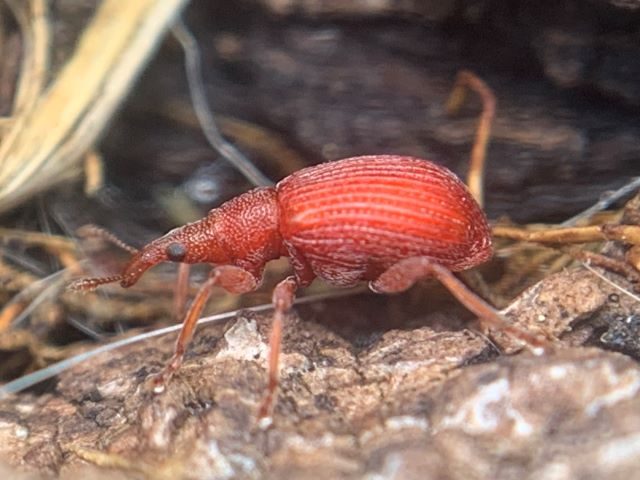
Our 500th species, recorded in October 2022 was the Hazel-leaf Roller Weevil, Apoderus coryli. It turns out our 600th species was almost a weevil as well, as we welcomed Apion frumentarium to the Garden as our 599 species, recorded on the 30th March 2024.
And what a beauty it is. This species feeds and shelters on docks, which are plentiful this year in the Garden.
Apion frumentarium – 30th March 2024
We recorded it on some deadwood within the boggy area (near its food plant). Online sources suggest it mates from April, so perhaps this individual was searching for a mate. However we have only so far seen this one individual.
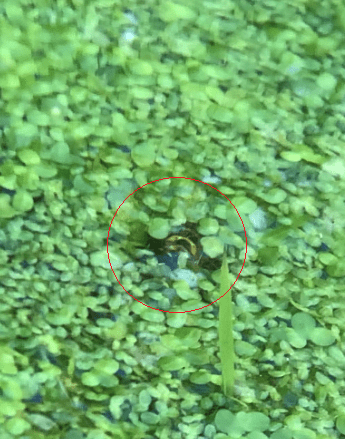
In August 2022 we sat at the newly made boggy area in the Garden and filmed wasp after wasp arriving to take water onboard. Wasps need to stay hydrated like all invertebrates and therefore are often found drinking at puddles and pools. They also take water back to the nest for others in the colony to keep cool and hydrated.
During nest building periods, a process initiated by the Queen but later taken over by workers, it is critical that wasps remain hydrated as the pulp used to make the nest is a combination of wood fibers and the wasps’ own saliva.
This of course means the wasps don’t just need water but a supply of wood fibres also. We filmed the wasp below collecting wood fibres from some deadwood in the Garden. Deadwood is another vital resource for many species and keeping the odd bit lying around can not only make the garden look more natural and attractive but also provide this valuable resource.
You can just about see the wasp with a mouthfull of pulp before it flies off (about 15 seconds into the video).
Sadly, collecting water can be a dangerous ativity as the occasional drowned wasp we come across likely demonstrates.
It does seem likely that our summers are now going to be warmer, dryer with more periods of drought. So despite all the rain the UK has seen since October 2023, it is vital over the coming spring and summer months to try and leave out safe sources of water for invertebrates to drink from. A ten second hose spraying across the foliage of the garden is a good way to instantly provide a dispersed source of water for the small creatures lingering under leaves or whatever shade can be found.
Keeping areas of grass and other vegetation long and quickly spraying the ground beneath will allow wet areas of soil to remain damp for longer periods. Indeed keeping long grass (meadow) areas is an ideal way of retaining mositure in soils.
Little pots half filled with stones to land on and half filled with water for them to drink is another useful way to provide for more mobile species. Just remember to keep replenishing the water supply. TIP: Don’t use thin plastic pots as these can easily bleach and crumble, starting to fragment into micro-plastics which are practically impossible to remove from the soil.
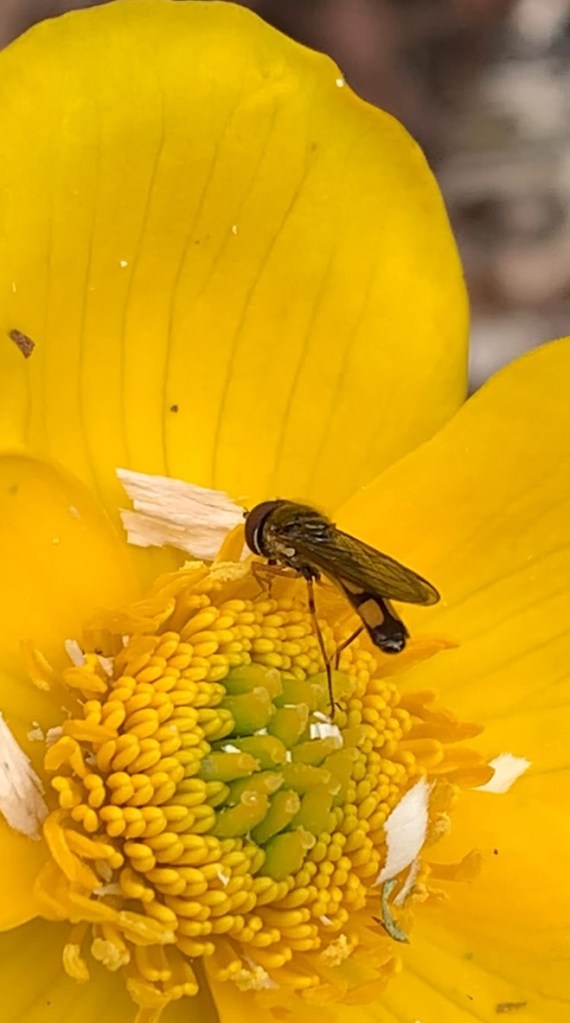
We welcomed two more fly species to the Garden list in recent days. First off we recorded our 22nd species of Hoverfly in the Garden in the form of Melanostoma scalare, more locally known as the Chequered Hoverfly. The rather slim specimen photographed below is a male, the female has a more rounded abdomen. It is seen here on Marsh Marigold, which is itself managing to survive having being added to the compost heap. The yellow abdominal markings on the hoverfly being longer than they are wide is indicative of males of this species.
Chequered Hoverfly – 22nd March 2024
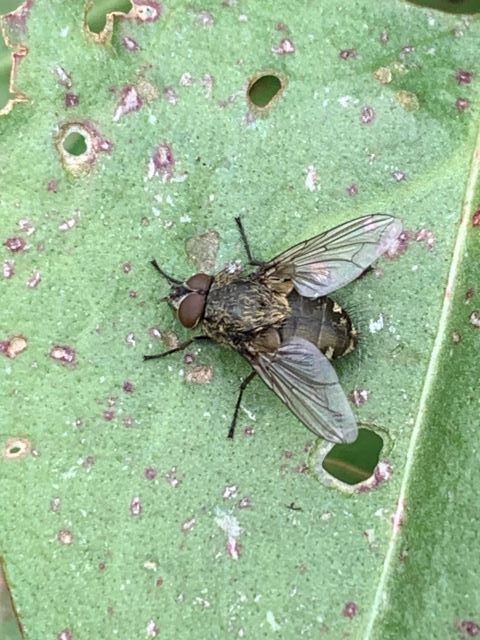
The next species has no English name, instead just the Latin name Fannia lustrator. At least this is the species we believe it to be, there are several others that look similar. However we managed to get some close ups, like the one below, and this highlighted enough characteristics to make us feel comfortable making a guess at species level identification.
Fannia lustrator – 24th March 2024
Both these species are widespread and common and have probably been overlooked to date.
Flies are a tricky order of insects to record due to difficulties in identification, and are as such under recorded in the Garden and elsewhere in the Countryside. The Dipterist Forum and Nature Spot are good sources of information that will help identify and classify species found.
It’s unusual for us to be playing catch-up on announcing new species in March, but thats the nice position we have recently found ourselves in, with several new species recorded in the last week or so. And here are two more…
Our fat fly is a Clusterfly called Pollenia rudis. These are very common and it seems surprising we haven’t recorded one before now.
We have drafted a little account for this species HERE.
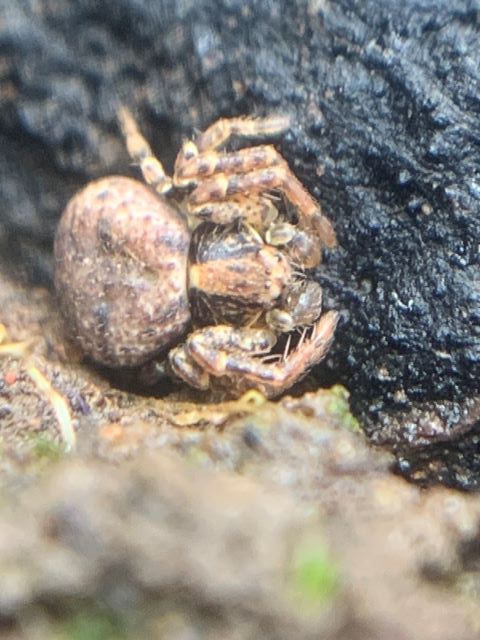
As for our tiny spider, well we haven’t been able to identify it down to species level, although we suspect it may be Ozyptila praticola. For the Garden Species list we have opted to record it simply as Ozyptila sp.
This little fella we estimate was no more than 3mm and was scuttling about on some dead bark. Again, a short note on this species can be found HERE.
We will soon have an update on the new wildlife pond (more newts spotted). And old Harry the Hazel has a hair cut.
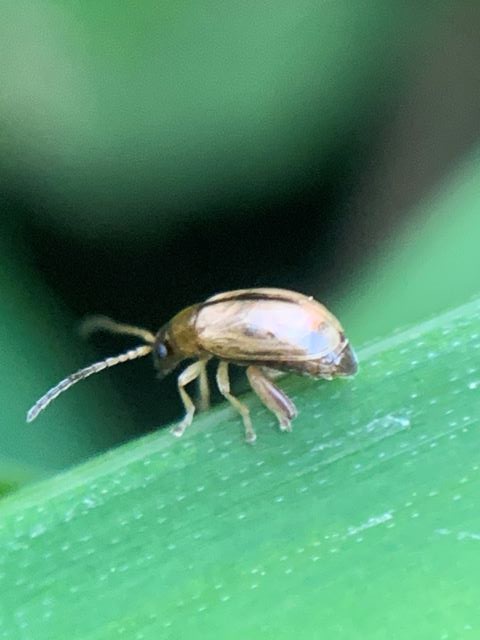
Another Garden first recorded on the 18th March 2024, this time a leaf beetle by the name of Longitarsus gracilis. There isn’t a great deal of information online about these little guys, but we have thrown together a quick species account HERE.
Longitarsus gracilis – 18th March 2024
A member of the family Chrysomelidae, of which we have recorded 3 species to date, the others being the Alder Leaf Beetle and the Tansy Ragwort Flea Beetle who’s larva, as the name suggests, feed on Ragwort just like those of Longitarsus gracilis.
Alder Leaf Beetle Agelastica alni
Tansy Ragwort Flea Beetle Longitarsus jacobaeae
We managed to create a youtube short film of the little guy wandering along a blade of grass.
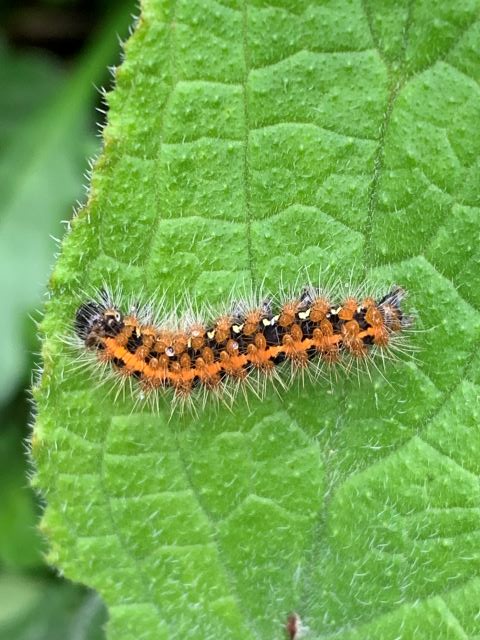
Lovely to finally record the Jersey Tiger Moth in the Garden, albeit only the caterpillar (larva), although this is just as spectacular as the adult we feel.
Jersey Tiger on Green Alkanet – 17th March 2024
We’ve typed up a few notes about this species, which can be read HERE.
Jersey Tiger Moths belong to the family Erebidae, and this is the 20th member of this family recorded in the Garden, including recent records of both the Garden and Scarlet Tiger moths. Once again demonstrating you don’t have to venture into the countryside to see a wide variety of wildlife.
As well as being St Patrick’s day, for us the 17th March also felt like the first day of Spring. We recorded several familiar species, Green Shieldbug, Flower Crab Spiders, Garden Ants, Jet Black Ants, Dung Flies, several species of slugs and snails as well as a couple of additional species that are new to the Garden. We will post details of these species once we have identified them.
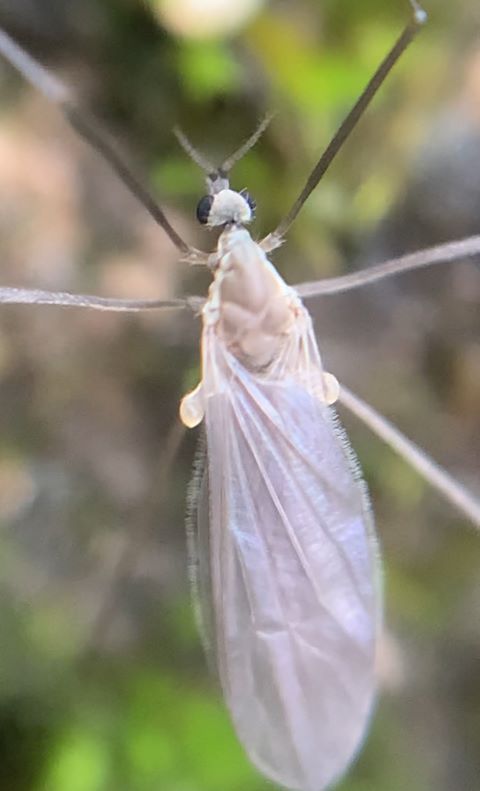
We could only identify the following insect down to family level. The family being Limoniidae (we think), close relatives of the true Craneflies.
Limoniidae spp – on moss steps – 16th March 2024
The main difference (that is easy to observe) between true craneflies and limoniidae when viewed in the Garden, is that they hold their wings differently when at rest. Our short species account helps explain this in more detail HERE.
This little fella was recorded on our concrete steps, likely associated with moss that grows here and from which we have recorded many craneflies emerging. This record lifts our cranefly and allied species total up to 6.
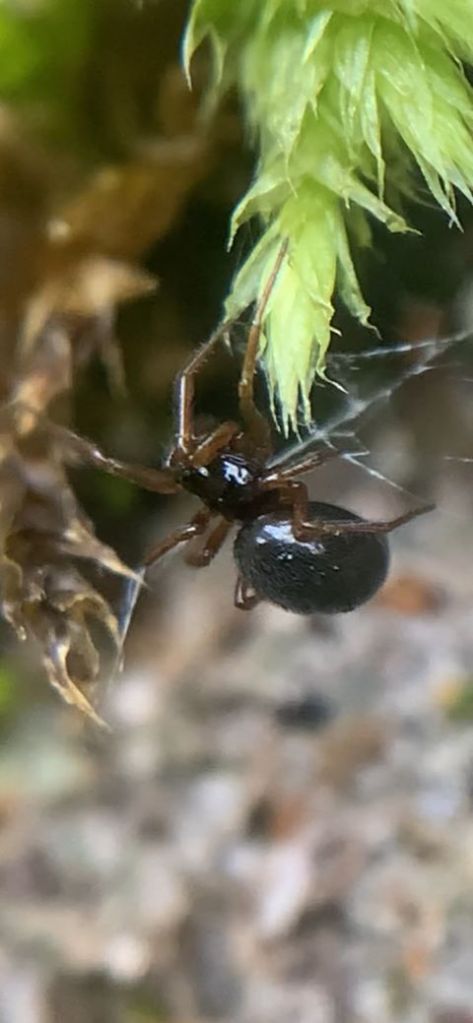
We also recorded a new species of spider, Enoplognatha thoracica, at the same time. A tiny spider belonging to the family Theridiidae, our third record from this one family in the Garden and our 23rd species of spider in total.
Enoplognatha thoracica – Found in moss on concrete steps – 16th March 2024
This species was also found within the moss on the concrete steps, a tiny habitat clearly able to support a wide range of species.
These two species take us up to 593 species in total. Demonstrating the diversity one can find in a relatively small area, and we know for sure this number is only a fraction of what we may eventually record.
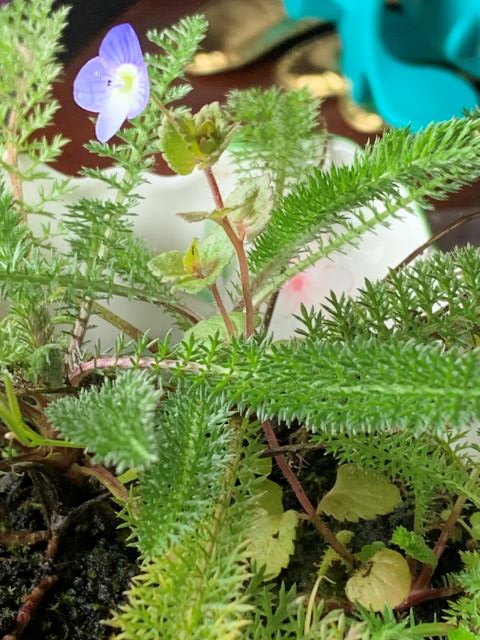
In a small china pot, amongst some lush Yarrow, the more feathery looking plant in the image below, we were pleased to discover this little blue / white flower. It belongs to the species Veronica persica, more commonly known as Common Field Speedwell.
And common it most certainly is. Indeed some gardeners consider it a weed as this little annual readily flowers and seeds for large parts of the year. Something we may need to keep an eye on, but for now it is restricted to this one pot in the top section of the Garden, just outside the back door.
It is supposed to have several medical benefits, which are noted on wikipedia, but not knowing about that we’d not like to comment. We are just glad to finally have a speedwell species, of which there are a few common ones about, in the Garden. We have put together a little guide to this species which can be accessed HERE.
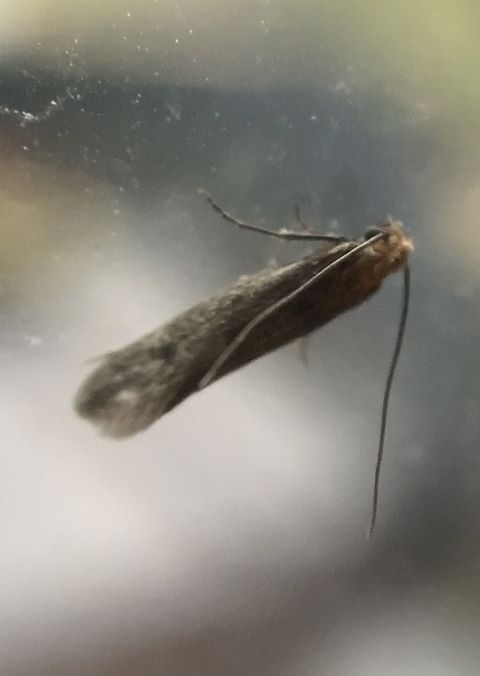
We say new species, but in truth it’s only new in so far as we’ve seen them in the house before on many occasions, but never recorded one in the Garden. Even this one was recorded on the patio doors and came from inside. They are extremely common and widespread.
Tinea pellionella – Case-bearing Clothes Moth 9th March 2024
A so called micro-moth from the Tineidae family. The family itself is massive with over 3000 species around the world. This species is so called because the larva (caterpillars) build themselves a little protective case in which they crawl about as they feed. They love being indoors as the larva like to feed on keratin in hair/fur but also carpets and other fabrics. For this reason many members of this family are referred to collectively as clothes moths. Making it unpopular in some households if an infestation builds up.
At the time of posting we have only recorded one other species from this family in the Garden, the slightly less drab Tinea trinolella, pictured here. The larva of which also build a case but are generally more associated with bird nests.
We managed to get some rather shaky video of the above individual, showing some of its features up close. We noted the light markings on the antenna, which we cannot find reference to elsewhere (about 8 seconds into the video). We check out our copy of Micro Moths* but this makes no refence to this characteristic.
A few things are appearing on the wing in the Garden now, even during windy grey weather. A sign spring is almost upon us.
DC:09/03/2024
*Sterling, P & Parsons, M (2012): Bloomsbury Wildlife Guides: Field Guide to the Micro moths of Great Britain and Ireland. Bloomsbury Publishing Ltd
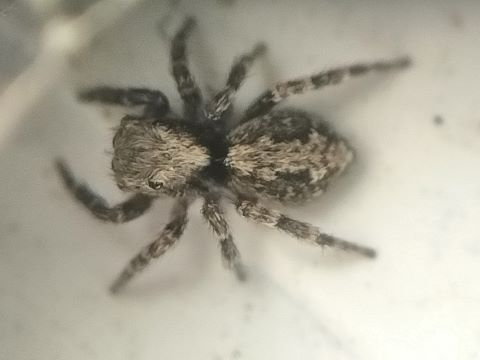
…otherwise known as the Jumping House Spider. According to Britains Spiders*, this species was first recorded in England in 1930. An online search supports this view, with several sites saying this initial record was in Devon. All sources agree that the species has spread across the country and into Scotland since this time. With distribution maps confirming our area (Bristol, UK) is one of the many places it is locally recorded.
Jumping House Spider – On Door – 18.02.2024
It appears more associated with human habitation than the wider urban or countryside space. Our visitor was first recorded indoors, on the back door. On opening the door it scarpered out into the big wide world. Elsewhere, it is typically found on the external walls and roofs of houses. So our visitor should have plenty of places to go if it decides to stay outside now that spring is on it’s way. Wikipedia suggests these guys feed on things like booklice, which we have recorded in the Garden.
We have mentioned before that one Garden favourite of ours is the Zebra Spider, which belongs in the same family as this new visitor. However, on this occassion it is fair to say the Jumping House Spider was much less inquistive than its close relative.
Anyway, we are hoping to see more of these guys over the coming years, and ideally get some better images, showing this spiders massive eyes (typical of this family), just google its latin name above and you’ll see what we mean.
DC: 18.02.2024
*Bee, L & Oxford G & Smith H. (2020) Britain’s Spiders: A field Guide. Second edition. Oxfordshire: Princeton University Press



 Wildlife Garden