September was warm and wet for the most part, indeed it seems this could well be the warmest September on record (globally), which is of course concerning.
Progress on the new pond was steady but slow and hampered by the decision to remove the mature buddleia to prevent excessive leaf fall into the new pond. The first step was to cut and remove the large stems and break them up.
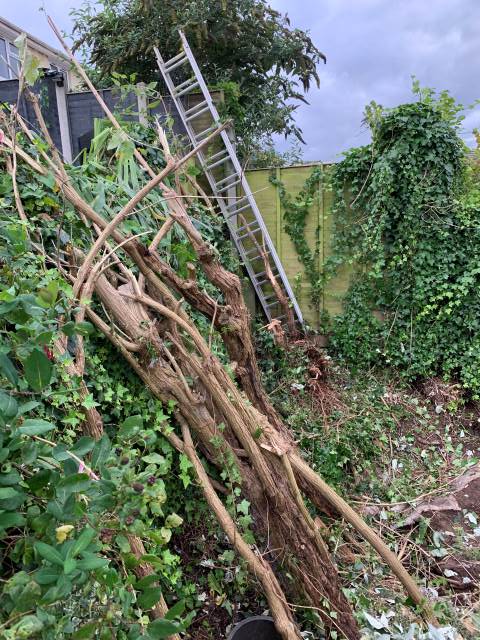
The removal of the root ball, as expected, was the real challenge and it took several hours to dig down and locate the main roots. We found a good way to cut through these was to drill repeated holes across them, rather than using a saw, and then hammer a crow bar through to severe them completely.
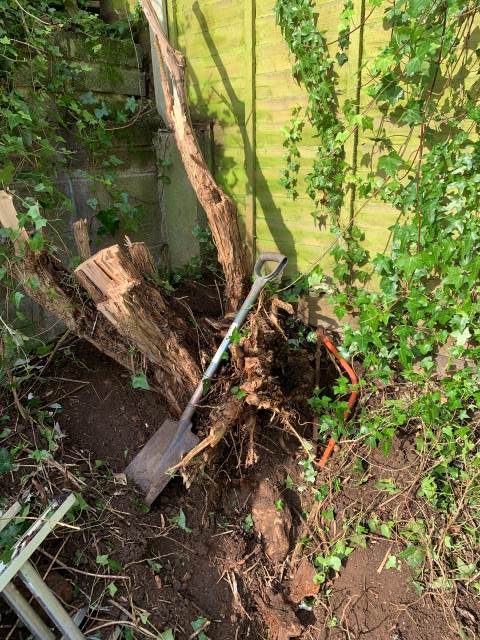

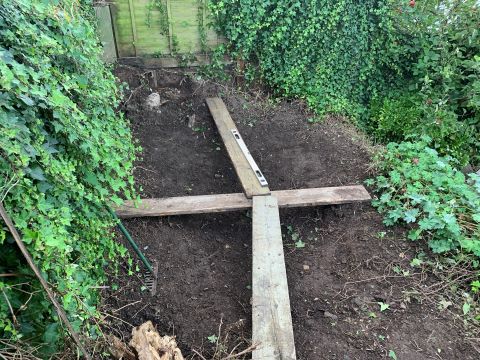
With the buddleia removed the next step was to remove the remaining vegetation and dig a rough outline of the pond. We are following the guidance provided by the Fresh Water Habitats Trust when it comes to pond design and have opted for a pond no deeper than 35cm. The concern with this approach is how often will we need to top up the water levels, especially if heat waves/droughts become more frequent.
The initial dig looked something like this, with us really just playing around at this stage to see what ‘level’ looks like. And this is how things currently stand. Pond liner ordered and hoping to get more done during October.
Now on to the new species!
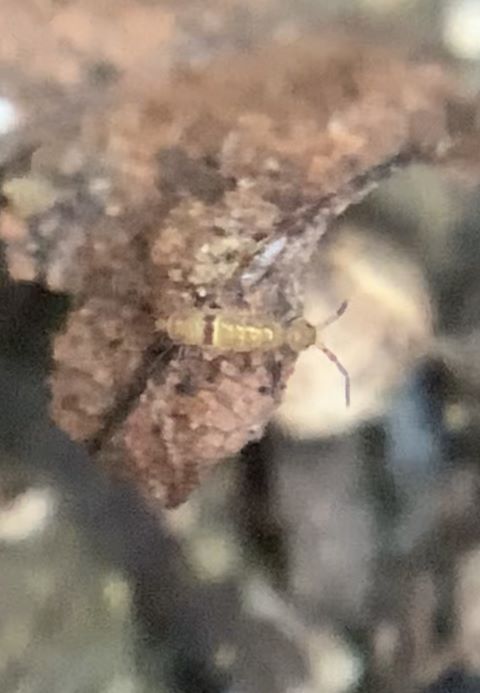
With three new Springtail species recorded in August we didn’t really expect to be recording another one so soon, but along came Orchesella cincta recorded on the 8th September. A bit more of a distinctive species this with that band across the middle. Click HERE for more info.
Next on the 9th was this amazing look fella. Nicrophorus investigator (a Burying Beetle) which feeds and breeds on dead/rotting carcasses, so not much we know of for it in the Garden.
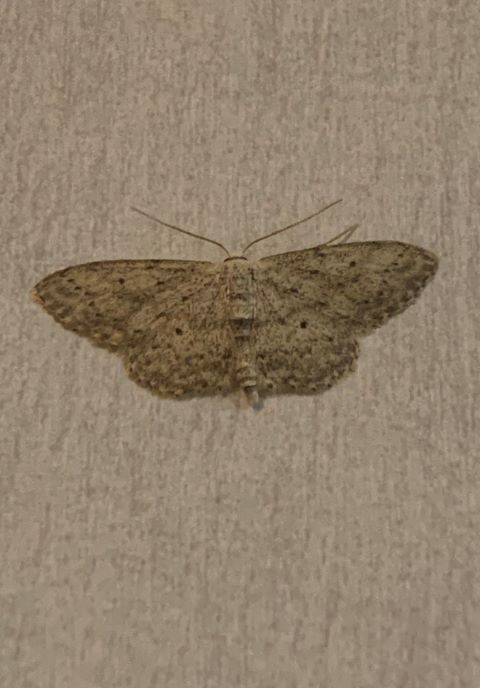
Then came a new moth, or perhaps one we just failed to record before. Idaea seriata, more commonly know as the Small Dusky Wave (9th September). Appeared in the living room on an evening when we placed a moth trap to close to the back door.
Another new record thanks to the moth trap was another species of beetle called Trechus quadristriatus (9th September). Marked as a most likely species as we cannot be 100% sure about the ID on this one.

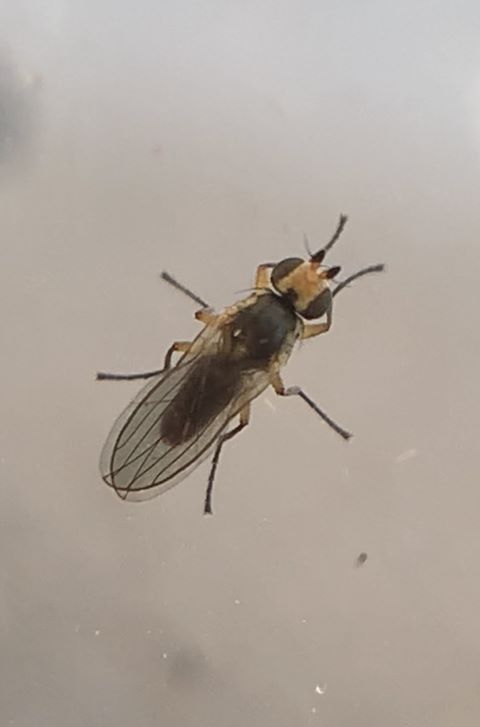
Another unsure species, Cerodontha dorsalis or the Grass Sheathminer Fly (9th September 2023).
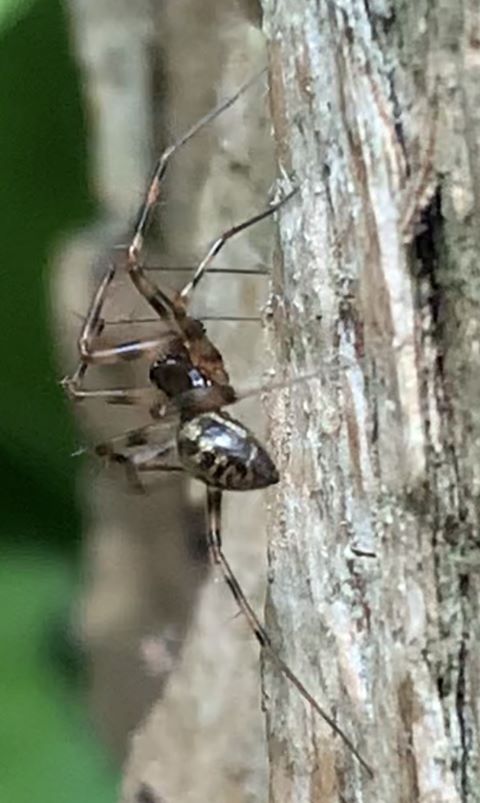
And a new spider, our 21st Garden species Lepthyphantes spp (a money spider) 23rd September 2023. Turns out the family to which money spiders belong consists of some 280 species in the UK and for this reason we cannot get this down to species level. However the Facebook recording group were able to help pin this down to the genus Lepthyphantes. We came across it whilst cutting the buddleia, it quickly scurried away.
Another most likely species, this time a centipede from the family Lithobiidae, Lithobius spp. Again recorded during the removal of the buddleia.
DC.08/10/2023
 Wildlife Garden