Little to record this October/November, primarily due to the prolonged wet weather the UK has experienced. A little rain wouldn’t usually deter us, but with the ground saturated we thought it best to avoid trampling the garden any more than was necessary. Of course things were happening out there. The mild weather prompted lots of late flowering. As we write this (2nd December) at least one Oxeye Daisy is still in full flower. Other late flower species, those still putting out new flowers into October included Green Alkanet, Cut-leaved Cranesbill, White Dead Nettle, White Campion and one that surprised us was a single branch of new blossom on the apple tree.
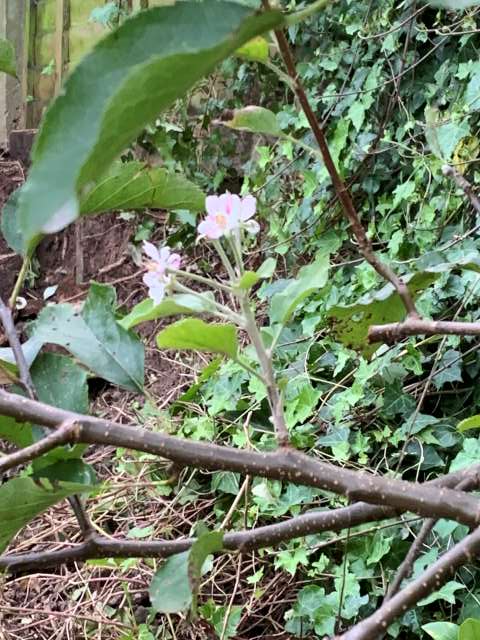
Apparently this is relatively uncommon but can occur because apple flower buds are formed in the preceding summer. If autumn weather is mild then some of the buds can blossom ahead of scheduled, believing it to be Spring. This may be something we observe more and more over the coming years.
Pond Restoration: Progress continues on the new pond on the middle level to replace the much smaller one we had there previously (see Septembers entry).
The hole itself was profiled to add gentle slopes and some shelves which will allow for a gravel/pebble substrate to be added to help pond plants anchor themselves under water as well as providing shelter for developing eggs and larvae of various species. Once this was done and any obvious sharp objects like stones were removed, the pond underlay was added.
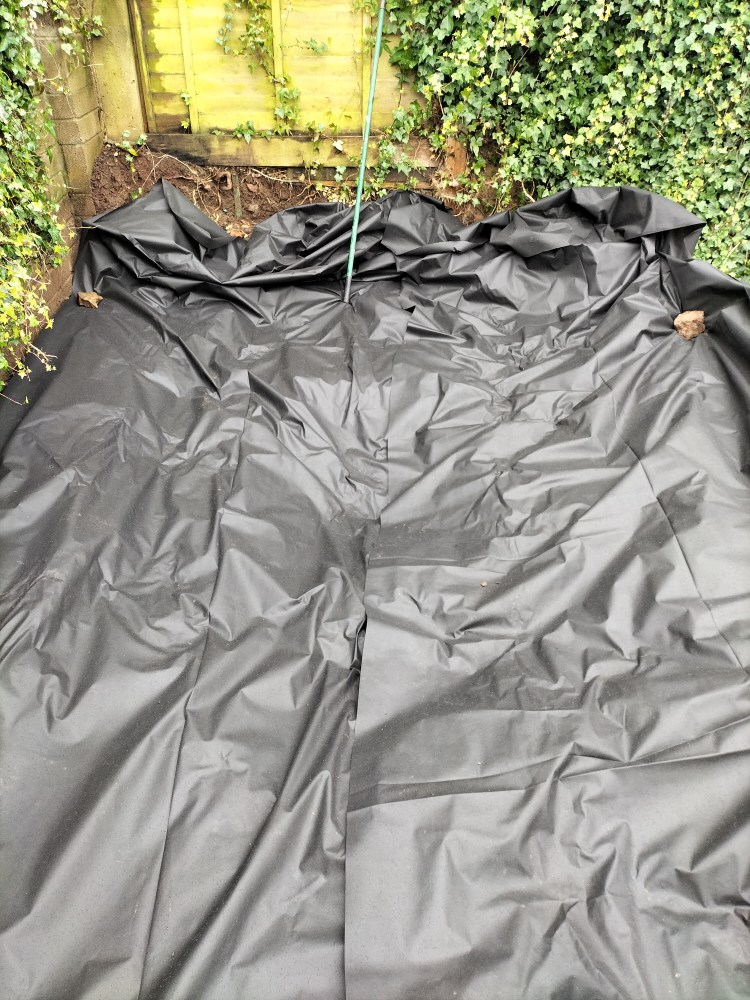
Once the liner itself was in place, the intention was to allow rain water to fill the pond throughout the winter. However the minute our backs were turned the local cat population started to appear. Our concern then being they could scratch/claw at the liner and perhaps even tear it.
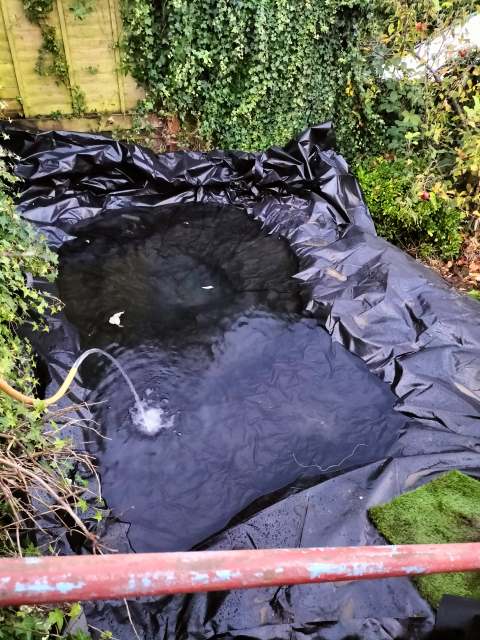
As such the next day (28th) we filled the pond with tap water to discourage unwanted visitors. This hadn’t been our original intention because tap water contains nitrates which will add unwanted nutrients to the pond. It is our hope that during the winter, rainfall will gradually dilute the tap water and with a margin of the pond left low, water will gradually overflow out of the pond, slowly diluting and removing the nitrates. The overflow/low area can be seen in the bottom right of the image below and if you look carefully you can see the various shelves we have created for the gravel.
Creating this pond was a very disruptive activity and some short term negatives have resulted. The main impact, apart from the removal of what was there previously, was to the adjacent stone steps where we were encouraging Mosses and our favourtie cyanobacteria Nostoc to establish. The steps got battered by the removal of stones, vegetation and soil from all our trampling about in the soggy mud. But thankfully we feel enough has survived to allow it to recover next spring/summer.
Meadow management: We made a decision at the end of the summer not to cut the meadow area at the end of the year as is normally recommended. This was because we noted the areas where the wildflowers had established best had very little (if any) competing grasses or aggressive species. In other words we felt it might make sense to allow the perennial wildflowers as long as possible to keep photosynthesising and strengthening themselves for next year. Other areas where grasses in particular dominated we also felt should be left uncut to act as refuges for overwintering invertebrates.
There are few, if any risks with this approach because the areas we are talking about are so small. We can do a little fine tuning in the spring if needed, for example removing by hand excess dead material from the previous season if it looks like that’s preventing fresh growth. This is one of the positives about wildlife gardening, compared for example with conservation of wildlife sites/nature reserves, where more broad brush management is necessary. There is a fair argument that cutting the meadow and removing the cuttings will help lower the nutrients in the soil, favouring the wildflowers over the more productive grasses in the long run. But again we can remove excess grass growth throughout the year during the summer to achieve the same result.
Another surprising benefit for leaving the meadow area long, as compared for example with the established paths we use which are trampled/compacted and short in terms of sward. Is that leaf fall from the shrub border (hazel, acer and apple trees) hasn’t settled on the long areas that much and instead has been blown into the paths or edges of the garden where it is easier to collect. Leaf fall in previous years has posed a minor issue for us as it requires regular raking to prevent it swamping the plants beneath and creating areas of bare ground by the middle of the winter.
Thankfully though some leaf fall has remained in the long uncut areas and this should eventually be broken down and taken underground by our worm population, adding lots of organic matter to the soil.
DC: 02/12/2023
 Wildlife Garden