We did very little in the Garden during what was a wet and windy winter season. March, on the other hand, truly did see the start of spring.
The annual army of Spotted Wolf Spiders seemed to emerge from nowhere as usual; first noticed on the 2nd of March, they can now be seen in most areas of the garden. They hunt not by forming a web but by chasing down prey.

They are also unusual in that the female carries her egg sac around with her and also the spiderlings once hatched, as captured here. Click HERE to have a look at our species account for these guys.
Another regular spider, the Nursery Web Spider, was recorded on the 8th March and is another species that goes the extra mile for its offspring by creating a Nursery Web structure in which to protect the recently hatched offspring.
This is a relatively large species, and we often find the female sunning herself on one of the artificial surfaces in the Garden. Possibly waiting for a male, who is much smaller and to offset some of the risk associated with courting such a large lady, unusually for British spiders, presents her with a gift of food.

Of course spring wouldn’t be spring without a few butterflies, which, as noted elsewhere on this website and others, had a terrible year in general last year. So it’s nice to see even the more regular visitors return, especially ones as bright and colorful as this Peacock recorded on the 29th.
Butterflies bask like this to control temperature, in this case to increase temperature on a sunny but not hot day. Note that at times the wings are bent down at the tips to touch the ground. This is apparently known as the Appression posture and is used to trap heat radiation from the ground as well as limit airflow under the thorax.
Other species recorded during March included the Seven-spot Ladybird, Green Bottles (flies), Pond Skaters, Green Shield Bugs, Common Wasps, Ruby-tailed Moths (well, the larvae of) and plenty of Buff-tailed Bumblebee Queens looking for a place to nest. Of course, the birds are back in song, with our first glimpse this year of Long-tailed Tits and Wrens. And in addition to all our usual plants, we also have spotted two regular fungi, Candle Snuff and Mica Cap (see images below, taken from previous years in the Garden).
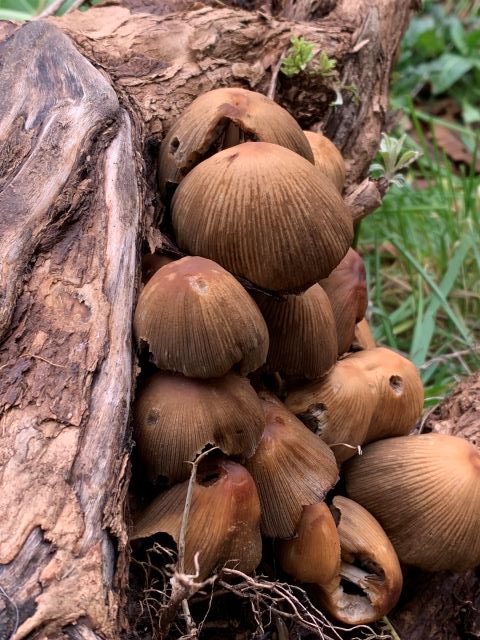
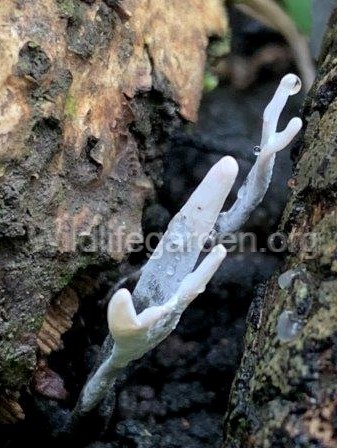
Of course, what we love most is finding a species in the Garden we have never encountered before, and one such occasion occurred on the 20th of March when we found this tiny little shell, the resident long gone.
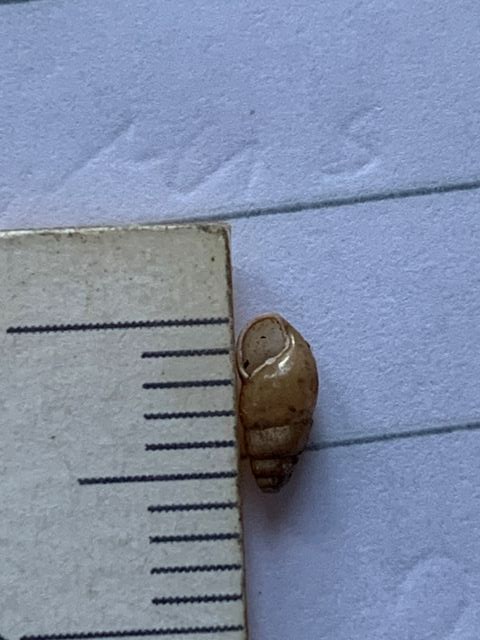
After keying it out using Land Snails in the British Isles (ref 1), we confirmed it was likely to be a Slippery or Glossy Snail – Cochlicopa spp. If you are ever interested in recording wildlife in your garden, then snails are often a great place to start, and a copy of the 1. below is recommended, as with just a little practice it is easier than many other keys for other forms of wildlife out there.
And of course, we have the next generation of frogs to think about. As previously blogged, we found the first frog spawn of the year in the larger wildlife pond on the 16th of February. Much more was deposited after this date, and on the 28th of March, we had several dense groupings of tadpoles throughout the pond, many more than we have seen in previous years. This video is of just one small group, but it shows the density of tadpoles we are witnessing.
In general, especially after such a poor year last year, we are happy with the amount of wildlife we are seeing returning to the Garden this spring. We really hope it sets the tone for the rest of the year.
DC: 13.04.2025
- Cameron, R. (2003) Land Snails in the British Isles. Preston Montford: FSC Publications
 Wildlife Garden