By the end of July it’s fair to say the garden was looking a tad tired. From above it still resembled a lush jungle of plants.
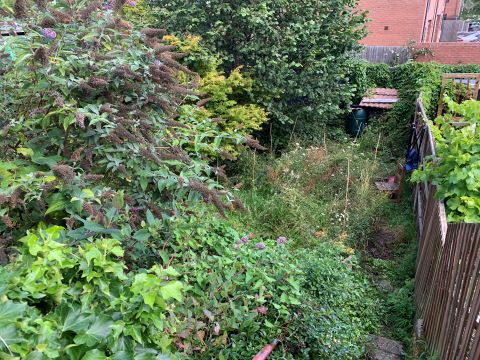
Yet up close the meadow area, in its first successful year of blooming, was going over. Thankfully dropping lots of seed in the process.
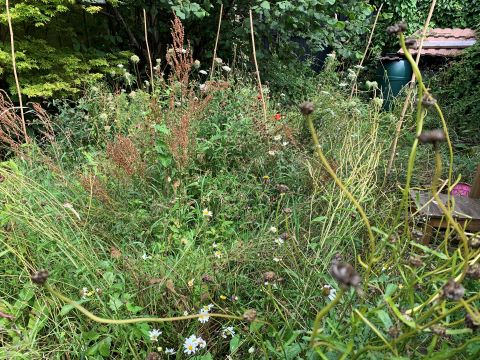
Later in August a decision will have to be reached over what to do next. In traditional countryside meadows, on actual productive farms, the meadow would have been scythed and the cuttings field dried. Being a small garden and not an actual ‘meadow’, we may experiment with cutting back some of the old growth but not cutting to ground level. More of a hair cut than a hay cut.
We are also aware that we let the meadow area dominate the Garden during this first year of establishment and this left us with very few locations to sit, observe and simply enjoy the very wildlife we are attempting aid. As such we may reduce its area slightly to provide a spot for a couple of seats for next year.
Of course the meadow isn’t the only area of the Garden. The shrub border is still going strong, with hazel, acer and apple tree still providing food, cover and shade. The Wildlife Pond on the middle layer will need rethinking soon. With our toying with the idea of making the whole middle area a pond/bog, currently only about a third is.
Here are the new garden records from July, not bad considering unlike June, July was mostly wet and unsettled.
Pilophorus perplexus – Family Miridae – Recorded 1st July: This little fella landed on my arm and I’d not really seen anything like it before. I nick named it the Magician Bug. We’ve not seen the adult of this species yet, which we gather are aphid eaters.

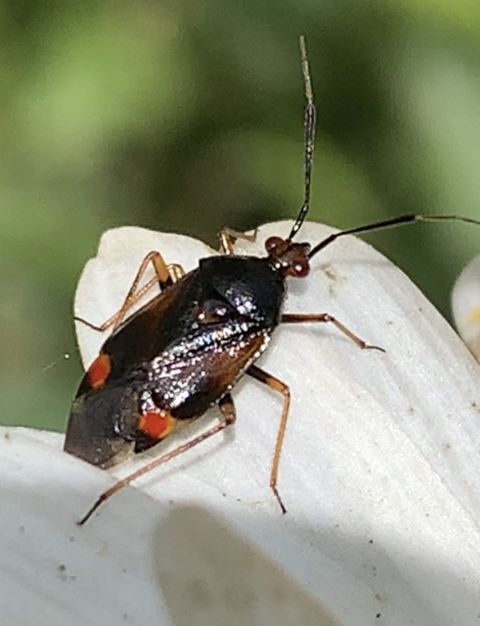
Deraeocoris ruber – Family Miridae – Recorded 1st July: We thought at first glance this was another Decaeocoris flavilinea, the two species look very alike but there are obvious differences. Another aphid eater although they will feed on lots of things, including others of their own kind.
Marbled White (Melanargia galathea) – On buddleiea 3rd July: Sadly no photo of this latest butterfly to be recorded. Taking our Garden butterfly list up to 14 species.
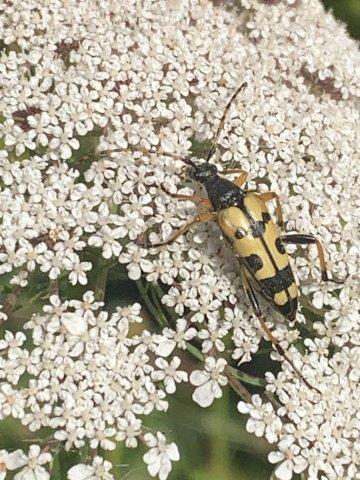
Spotted Longhorn Beetle (Rutpela maculata) – 19th July: The first of two longhorn beetles recorded in July. Absolutely amazing looking insects.
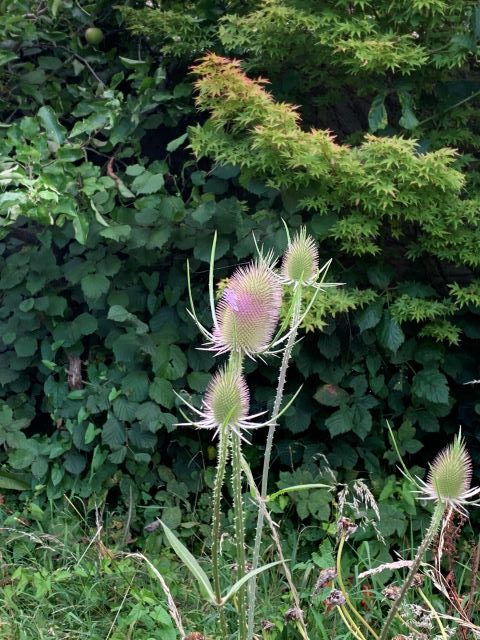
Dipsacus fullonum – Teasel – flowered 20th July: Nice to record a new plant. Teasel isn’t the sort of plant that goes unnoticed but we thought we’d wait for it to flower before adding it to the list.
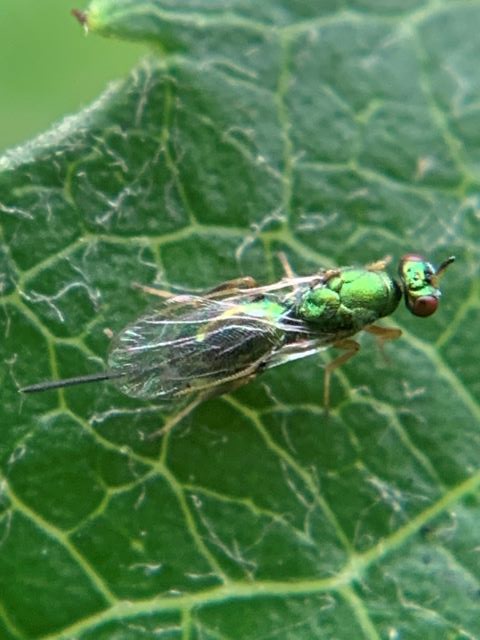
Torymus spp – Wasp – 21st July: Cannot get this fabulous little wasp down to species level, but whatever it is we welcome it to the Garden.
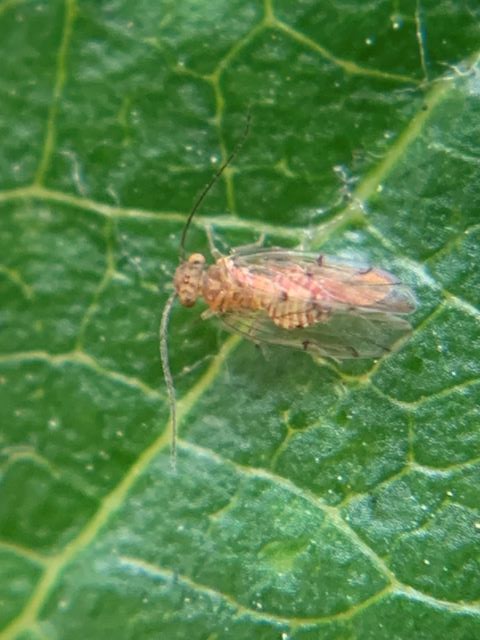
Ectopsocus petersi 21st July: This is our first representative of the Order Psocodea in the Garden, but as you will note below it was quickly followed by a second. These are the Book Lice. Odd little critters.
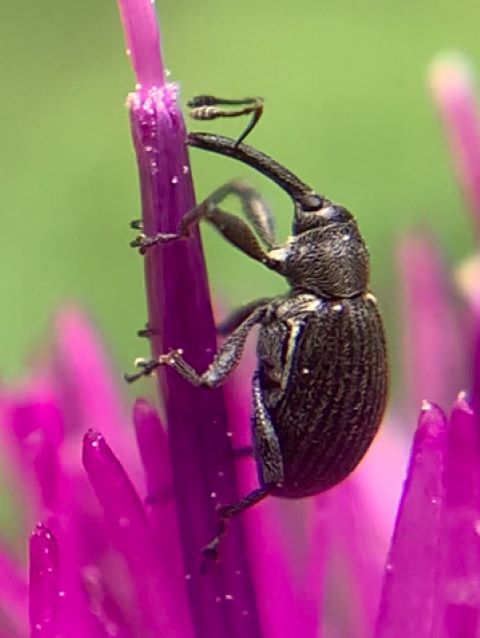
Anthonomus rubi – Strawberry-blossom Weevil 21st July: Search this site and I think we mention a few times how much we love weevils, and here is another beauty. Our neighbours grow strawberries so we probably have them to thank for this visitor. Although I doubt they welcome them as we do. Both adults and larva feed on strawberry plants.
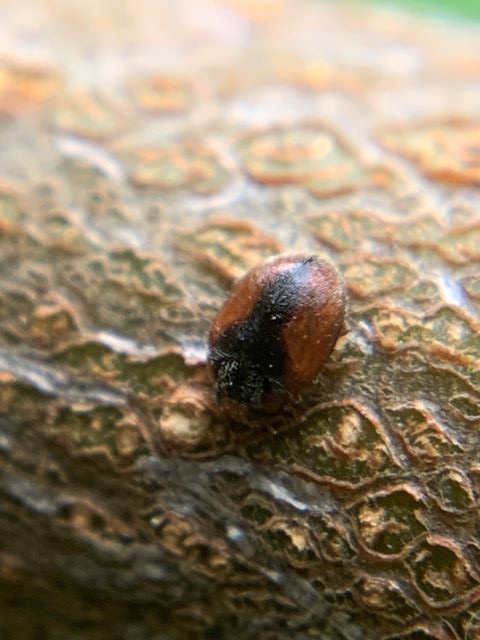
Scymnus interruptus – Red-flanked Ladybird – 21st July: Always nice to add a new Ladybird. This is one of the tiny non-conspicuous species, not really looking like your typical Ladybird.
Ruby-tailed Wasp – Unknown Genus/species – Family Chrysididae 23rd: Ever since first seeing one of these down in Devon in 2021, we’ve been on the lookout. Perhaps one of the most stunning groups of insects you’re likely to come across in the UK.
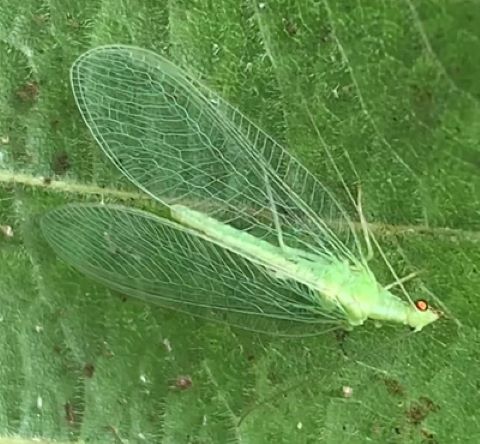
Chrysoperla carnea – Green Lacewing – 23rd July: Our previous 4th July 2021 record (when we last had a look at IDing this insect) was only down to genus level, due to the poor image we had to hand. We are more confident now about its identification as our July 2023 images show the pale line along its back, the lack of black markings on the head and the hairy veins on the wings (click on image below). This makes it very likely to be C.carnea, which is after all the UK’s most common Green Lacewing.
F-winged Barklouse – Graphopsocus cruciatus: Family: Stenopsocidae – 29th July. And as noted above we promised a second member of the order Psocodea, and here we have one in the form of this common Barklouse. Which we managed to quickly film and put as a short on youtube.
Really happy to see so much wildlife in the garden, considering how little time we spent out there due to all the wet weather. Still, better than no rain! Our list of species at the end of July totalled 562 and as we write this on the 7th August we have already added some more.
DC: 07/08/2023
 Wildlife Garden