Another wet month in the Garden, but with just enough sunny spells for some snooping around for wildlife. Although a slight concern we have is that snooping is becoming more difficult. Why? In short because our Garden has become a little too wild (I know! I know!). But just look at the image below from the 18th August! All that June sunshine followed by two wet months has seen a flush of lush growth.
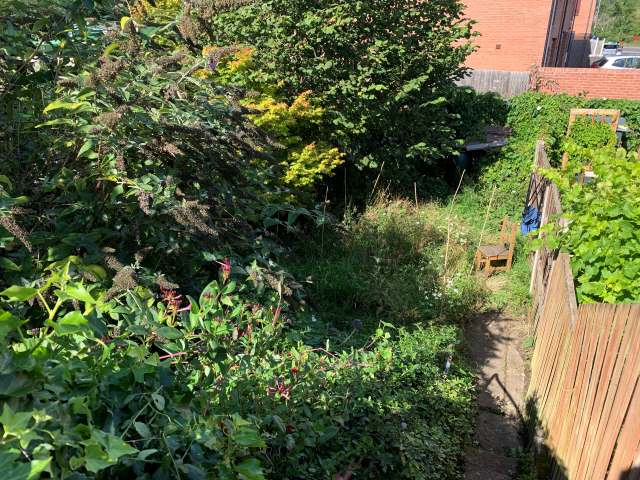
Compare this to where we were just two years ago when we started this project and you can see what we mean. I mean, where is the hazel going?
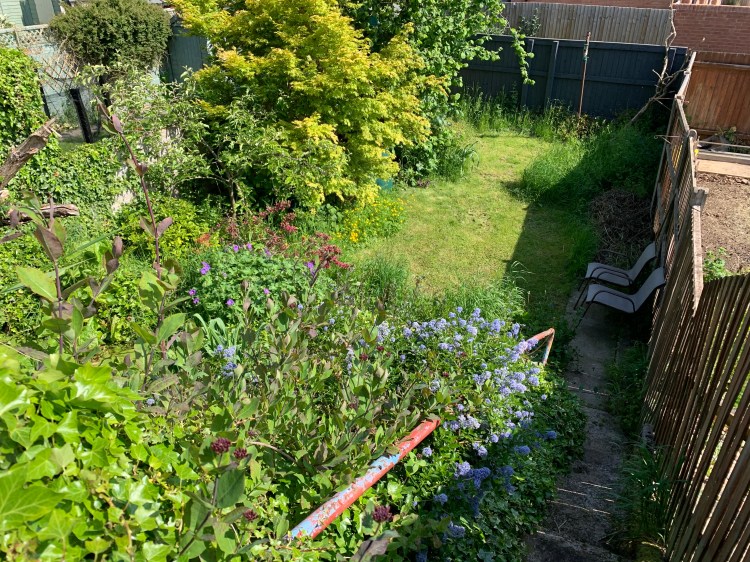
We feel three things will need to change before next spring.
- Firstly the meadow area. Now in fairness we didn’t know where the wild flowers would best establish so we went a little crazy. Now we know and I think we can start to cut other less established areas shorter and maintain these as ‘Places from which to observe’.
- Secondly the pond on the middle layer has become stagnant and pretty lifeless over the years and will need restoring. We think that we need a larger pond, which will be more stable in terms of water levels and temperature. As such it will be out with the old and in with the new.
- And thirdly Mr Hazel will need either coppicing or a heavy trim, likely the former to increase its life expectancy. But we haven’t quite made up our minds yet.
All this will mean significant disturbance to the Garden, something we usually try to avoid. So we will tackle one problem at a time, beginning with the pond. We will keep a record of the new pond creation and update the projects page as we go along. This sort of work normally happens no earlier than September, but as we knew the pond was all but void of life and we had a break in this years very unpredictable weather we went ahead and began work on the 28th August to remove the old pond as shown below.

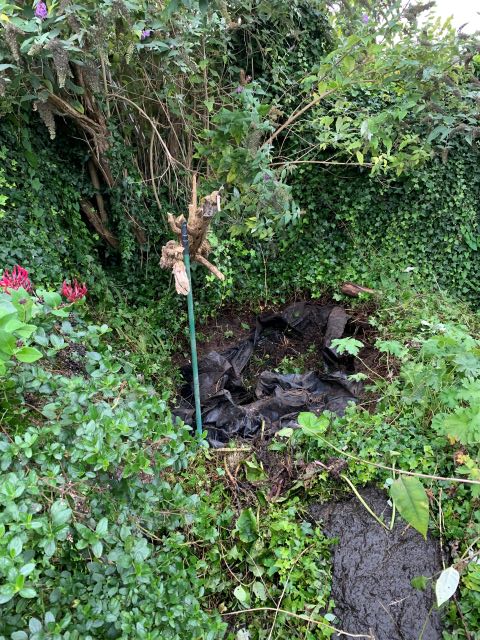
As we suspected we found few signs of life. Indeed we were shocked by how little invertebrate life remained. Just a few water slaters.
Now for this months new species. Nine in total.
- Roesel’s Bush-cricket, Metrioptera roeselii. A really nice surprise this one. We noticed a cricket stridulating in the Garden but it sounded different from the noise our crickets usually made. We managed to sneak up on a particularly noisy individual and we were pleased to note this new species, looking cool as you like. You might need to turn your volume up for this one.
2. A new mollusc to add to the list in the form of the hairy Trochulus plebeians, recorded on the 6th. Only our 8th species of snail in the Garden.
3) Next up the small and rather unusual Anomoia purmunda, recorded on the 7th. Unusual in that it runs about on surfaces with is wings held in a forward pointing position, one assumes to make it look larger than it is as shown below, the wing patterns are brilliant.

4) Another fly, this time one most people will apparently be familiar with. An extremely common species named Tachina fera, which for whatever reason we don’t recall seeing in the Garden before now. Pretty distinctive as can be seen below. Click HERE for a little more info.
5) A new bee species is always a bonus and it was great to record the Bronze Furrow Bee – Halictus tumulorum on the 20th. Click HERE for more info or below for a quick peak.
6) The first of 3 new springtail species. Starting on the 26th with these guys, Deuterosminthurus pallipes. Click HERE to read a little note on them or see if you can spot the little yellow dot with eyes in the video below.
7) And our second new springtail, the eagle eyed will have noted on the same flower as our yellow friend above, was Entomobrya intermedia. Click HERE or see below.
8) Neoascia podagrica, not a springtail but our 21st species of hoverfly, recorded on the 26th. Click HERE or below.
- And that third Springtail we mentioned, Orchesella villosa, was recorded on the 27th. Click HERE or below.
And finally back to the rain, just another look at the downpour Bristol experienced on the 26th August.
DC: 01/09/2023
 Wildlife Garden