A look back to last month’s diary entry and it all kicked off with some unexpected snow. This month kicked off with a bit more colour, but after a promising start, grey once again ruled the month.
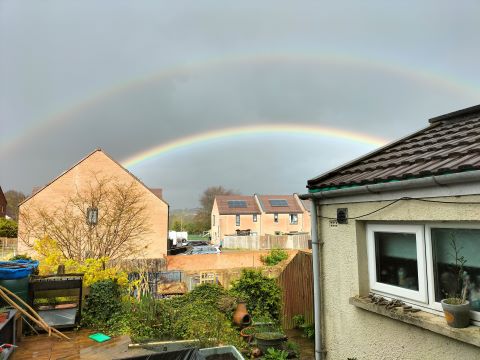
That said, we did have some very nice weather during the first half of April before the clouds returned. Looking back on previous diary entries, April was fairly typical, mild and wet.
The Garden has changed considerably since last April. The meadow area is much more advanced, possibly because it has had another 12 months to establish, but mainly we believe due to our decision last summer not to cut the meadow area at all. Our thinking being that the grass wasn’t outcompeting the flowers, which are themselves mostly perennial species. Just compare the images below, that on the left being the meadow area on 29th April 2023 and the much more vigorous growth on the right taken on 6th May 2024.
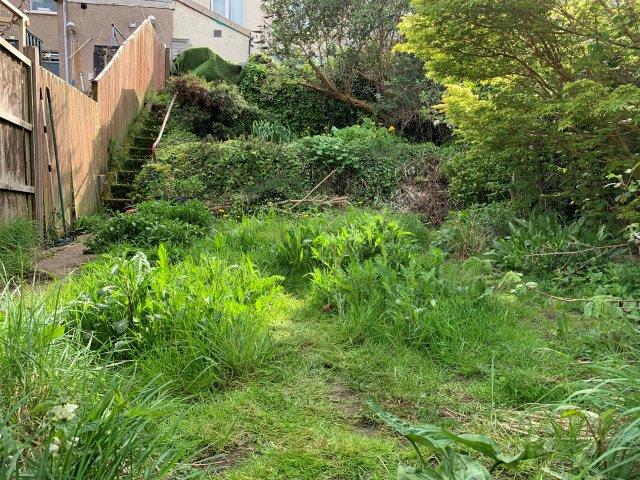
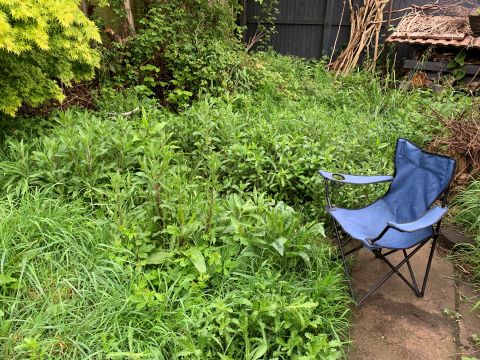
However there is one flaw to this plan which we are very aware of. Sun and water are not all that influence lush growth. Soil nutrients are also key. And by not cutting and removing the vegetation, then overall few nutrients are being removed from the soil permanently, although slowly they will leach down through the soil column. Being a dog owner ourselves and knowing that plenty of cats like to “use the facilities” in the Garden, concentrated nutrients are constantly being added. To get around this issue we hope that by allowing less desirable species such as docks, dandelions and grass to grow and then removing them as mature plants before they seed, we will see an overall reduction in soil nutrients. But we have no direct way of measuring this.
Not everything is going as we had hoped. The boggy area is dominated by Yorkshire Fog (a vigorous grass) and Docks. Again indicative of high nutrient levels and disturbed soil. Our approach here may be something more drastic. We are thinking of splitting the area in two and removing most of the vegetation from one half. Once this has semi-recovered, we will remove the vegetation from the other half and then continue on a rotation. All arisings will be removed. We will also stop topping up the area with tap water during the summer, as it can contain 10 times the nitrates found in rainwater. This may well see the whole area dry out from time to time. This would happen naturally in any case and will perhaps offer us the opportunity to remove a percentage of any silt that may already have accumulated, thus slowing down succession.
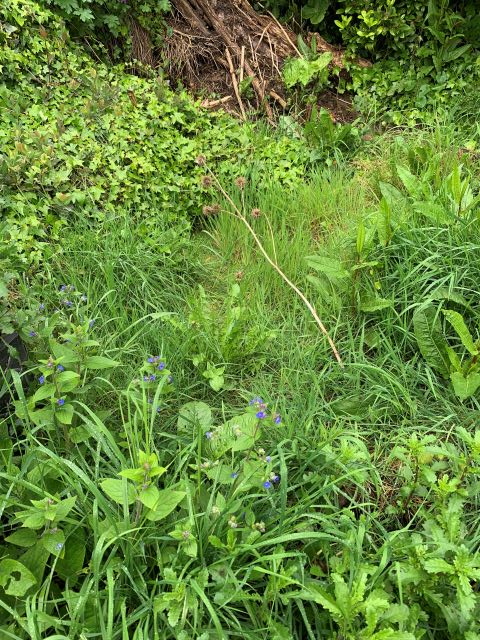
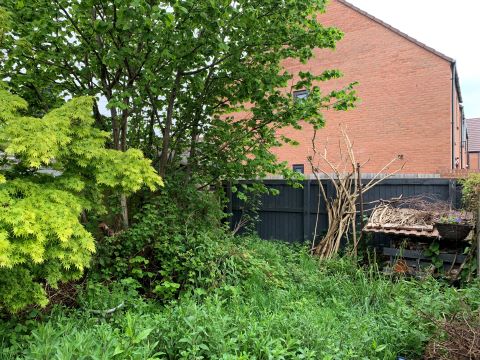
Some things we have already done seem to have worked out as planned. Cutting back the Hazel has allowed much more light into the back of the meadow area as can be seen below, adding to the vigorous growth.
The pond is still coming along slowly. Initially, we had wanted it finished over winter, but it’s nice to actually take our time with it. Since our March diary entry, we have worked our way down the side of the pond, adding gravel and rocks. The pond is rammed with frog tadpoles, and we do every now and then catch a flash of orange as a newt races to and from the surface, flashing its belly at us. The spotted wolf spiders seem to have taken a liking to the gravel.

So overall we feel set now for a good summer. Hopefully some pond plants will arrive naturally in due course, and we will soon have some new species to record. April was a good month for new records (see our blog entries), including three species of hoverfly seen for the first time here.
The stand out species for April are the Green Shield Bugs, very good numbers as always. Their abundance seems to fluctuate less than some other types of insects, for example ladybirds, which have had a reasonable year so far. Although we know Ladybird populations often change from year to year based on their success or otherwise during hibernation and migration from the south supplementing the residential numbers. 7-spot are doing well as usual but so too are the 14-Spot species, which seem to be having their best year to date.
DC: 06.05.2024
 Wildlife Garden