Hedera helix
In 2006 we planted Ivy next to the top of the large retaining wall in our Garden, and during this time it has spread to the smaller retaining wall below this, as shown in the centre of the image below taken in April 2023. Indeed, if left unchecked, it would have probably spread across most of the Garden during this time. It constantly needs cutting back.
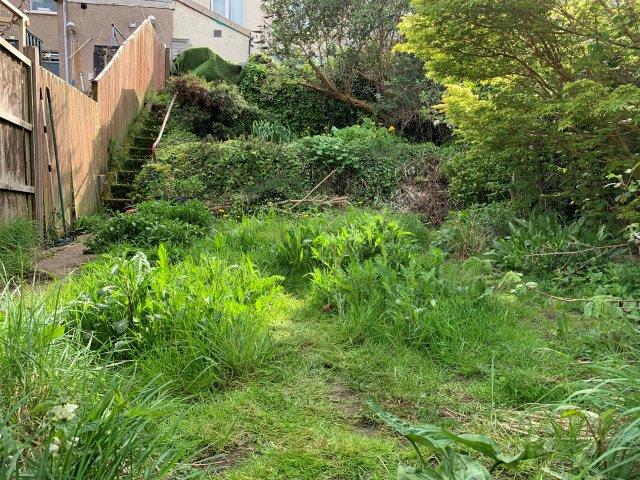
It’s a plant we take for granted really, yet with the possible exception of the hazel tree, it’s probably the largest plant in the garden. It hides those ugly concrete block retaining walls and offers shelter for invertebrates, small mammals, birds, and amphibians.
However, the one thing it has never done in all this time is flower. Until this year that is, when on the 24th of September 2024 we noted a small section of the ivy near the top of the garden steps looking like this.
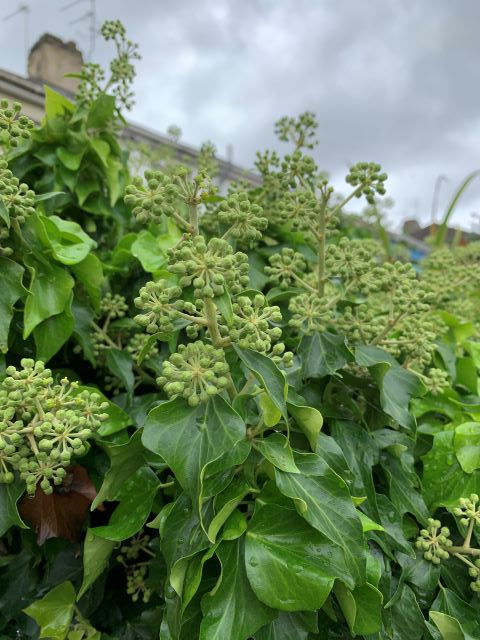
I’ve mentioned this to a couple of people since, and they were a little surprised to discover ivy ever flowered. Perhaps this is because it is an evergreen or that the flowers are a little unusual. Maybe it’s simply that people mostly find ivy in woodlands and fail to either notice the flowers at all or don’t associate the flowers with the ivy plant itself.
Whatever the reason, we have been waiting a very long time for this to happen; we’d almost given up hope to be honest. Flowering ivy offers a very late source of nectar to many invertebrates and is especially important for those that will overwinter as adults to complete their life cycles the following year. We often note plume moths and crane flies sheltering within the foliage, although in the former case this may be due to bindweed (the larval food plant of common plume moths) growing amongst the ivy for support. In the wild, ivy is useful for a great many species, including roosting habitat for bats.
Ivy is slightly unusual in that it exists in two forms. A juvenile form, where it grows and clings to surfaces using specialized hair-like structures, and a mature form which can support itself, but more importantly produces flowers. The juvenile stage can typically last 10 years, but in our case it has taken 18, and even now it is only flowering over a relatively small section.
The fruits should develop between November and January, and can be a useful food source for foraging birds during the winter months. We will keep an eye out for the fruits and hopefully next year more of the plant will be able to produce flowers.
DC: 17.10.2024
 Wildlife Garden