It has to be said, this year so far has been very poor for invertebrates. Frequent walks in the Garden on sunny days are simply not finding very much at all. The image below was taken on the 29th of June, in perfect conditions: gentle breeze, warm, and bright. Yet very little was on the wing. We’ve noted in previous years that some species or families of species have good and bad years. For instance, 2022 was particularly poor for ladybirds. But this year just seems to be poor for everything. This is, of course, concerning as invertebrates form a vital resource in the food chain, and many birds and mammals, especially chicks dependent on invertebrate prey, may well be suffering as a result.

That said, we have identified a couple of new Garden insect species recently.
First up is a third species of shield bug belonging to the family Pentatomidae, the Sloe Bug or Dolycoris baccarum. It’s a species we see all the time in the surrounding area but have never once seen in the Garden itself.
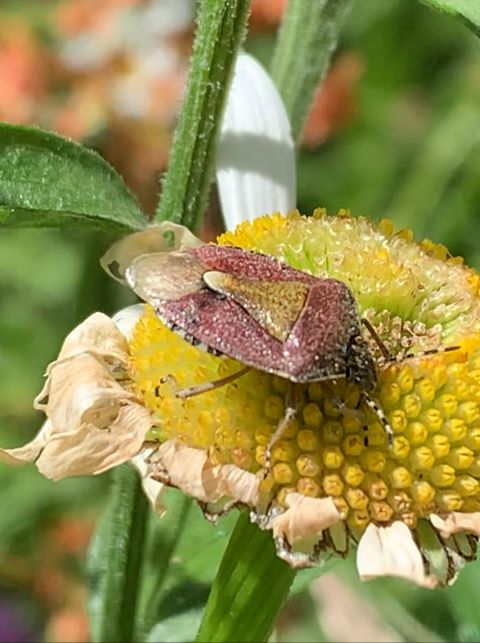
Contrary to its name, it feeds on the flowers of many different plants, not just Blackthorn, and is a common species. It’s also known as the Hairy Shield bug. That grey fuzziness you can see in this image is indeed a fine mottling of hairs. And just look at those colours, fantastic.
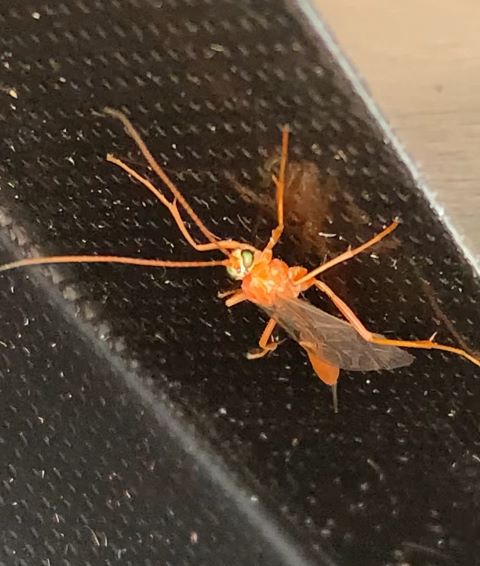
The second new species arrived at the moth trap, but it’s not a moth. Take a look at this fella.
It’s a nocturnal ichneumon wasp, but we cannot be certain of the exact species. We suspect it belongs to the genus Ophion, which is mostly an endoparasite feeding on the larvae of moths.
All very concerning. We know other people and specialists are also reporting poor numbers of invertebrates, and we suspect there will be various explanations given for why this may be. All we can do with our green spaces is provide as much resource as possible for as many key stages of an invertebrate’s development as possible. Food (and water), shelter, and a lack of disturbance throughout the year are vital.
DC: 02/07/2024
 Wildlife Garden