Calopteryx virgo & Pyrrhosoma nymphula
The order Odonata includes the well-known Dragonflies and Damselflies, but also the less well-known Demoiselles, of which there are two species in the UK. On the 10th May, we finally welcomed our first visit from the aptly named Beautiful Demoiselle (Calopteryx virgo), pictured below resting upon some ivy. This particular individual is a female, easily distinguished from the male by the color of her amazing wings, males having much darker ones.
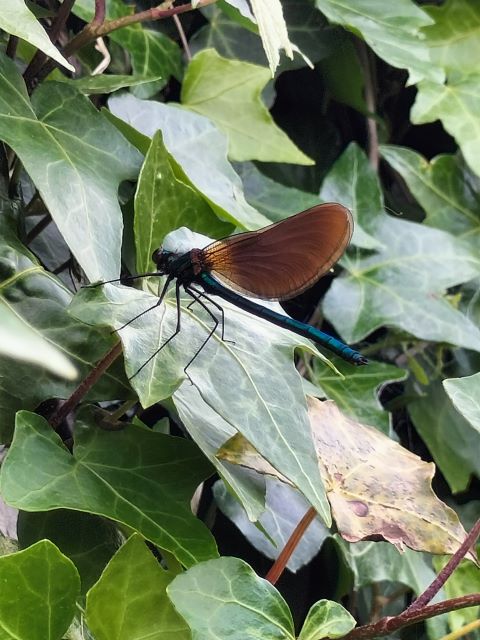
Demoiselles begin their life cycle in flowing water as an egg laid on water weeds, and the aquatic larva develop within the flowing fresh water habitat over a period of two years, hunting within the depths for small prey. As such this species will only be visiting the Garden as an adult, searching for food on the wing. It has most likely travelled from the nearby nature reserves surrounding the River Avon or Brislington Brook. Therefore unless you are lucky enough to have a stream running through your garden there is probably little you can do to acttract this species to permanently set up residence with you.
However, there are species of Odonata that you can attract to your garden with only a small area of standing fresh water. And we have been lucky enough to recently confirm that the Large Red Damselfly does indeed breed in our Garden.
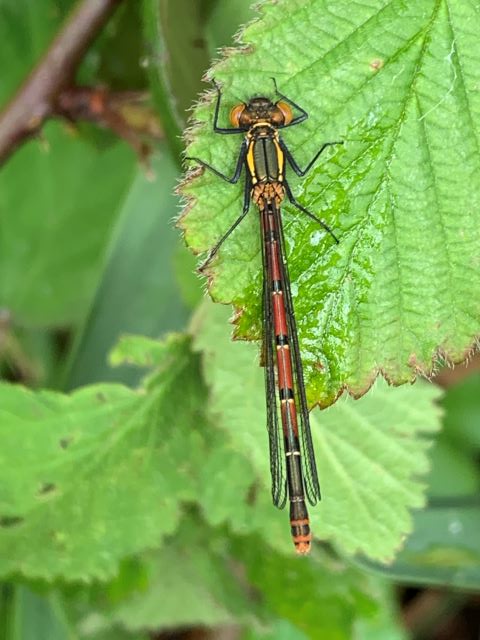
On the 6th May we spotted the above Large Red resting on some bramble, again this is a female. We were not especially suprised as this species often visits the Garden in spring so we were expecting it. This lady even let us film her for a short while…
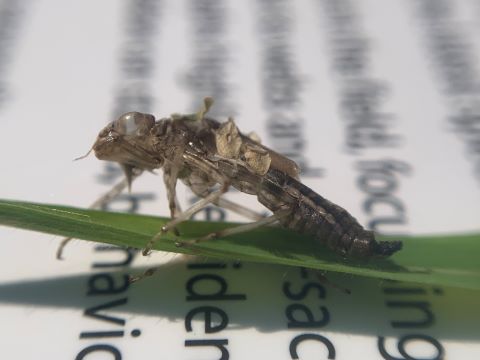
We started to see these guys in good numbers and suspected they might be emerging from somewhere close by and checked our boggy area as it currently contains the only fresh water with emergent stems currently in the Garden and up which the larva finally ascend to become adults. And bingo!!!
…and of course we popped back later to get a photograph of the shed skin or exuvia as it is called…
There is another species of Red Damselfly that may be about in the area, the Small Red Damselfly. Thankfully they are easy to tell apart from the Large Red as they have red legs whilst as you can see the Large Red has entirely black ones.
So another reason why it’s good to have some standing water areas in the Garden, not only do they offer hydration for a wide variety of animals, they are also where some animals call home.
DC: 14.05.2024
 Wildlife Garden